Makara Peak mountain bike park
Wellington: Easy Rider Guided eBike Tour
Duration: 2h
What is Makara Peak Mountain Bike Park?
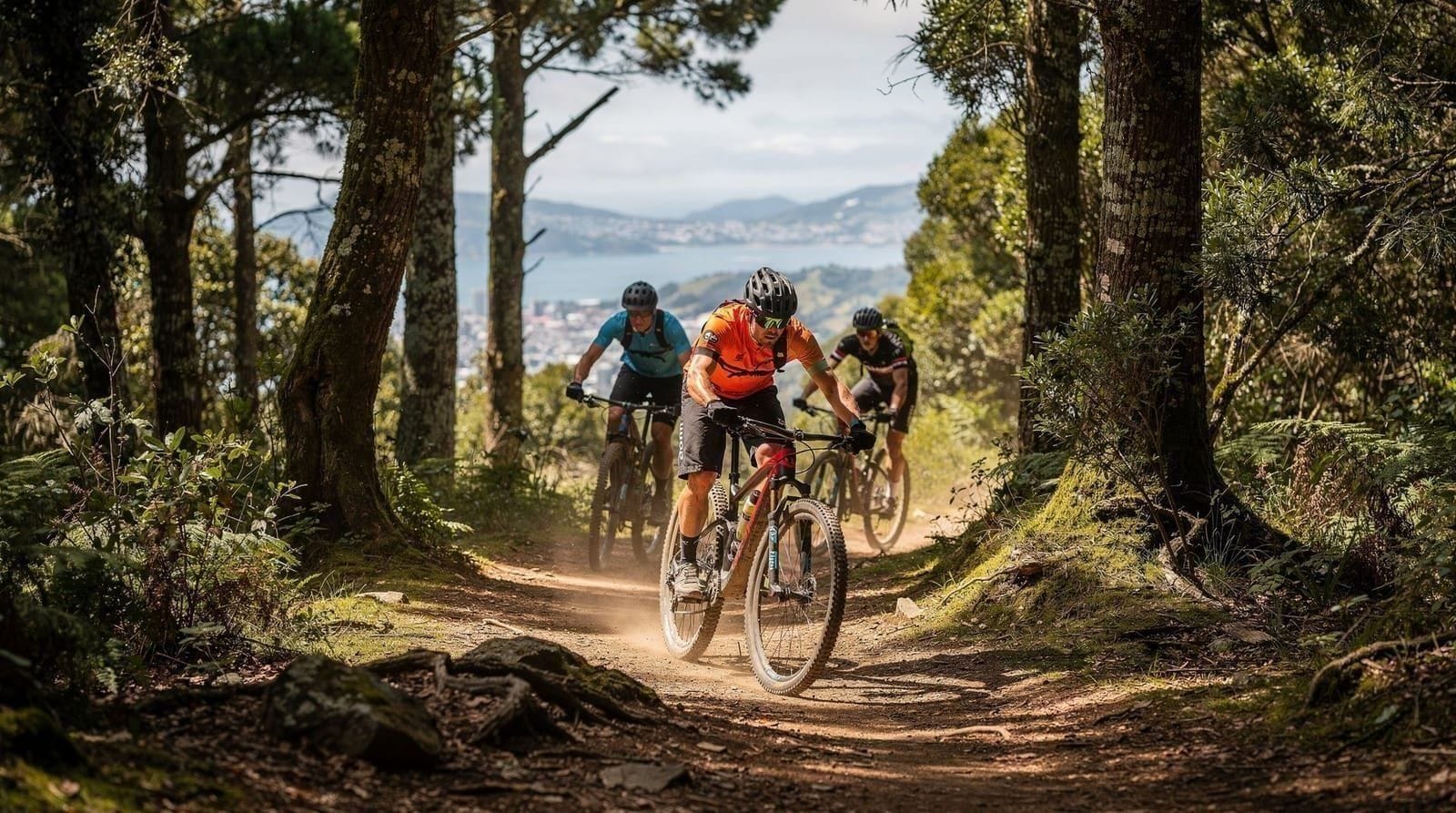
Makara Peak is Wellington's dedicated, purpose-built mountain-biking reserve, with around 40 km of graded trails ranging from easy, wide fire-road-style routes to demanding technical downhill single-track, all free to ride. It's about 20-25 minutes' drive from the CBD, with no public transport directly to the main trailhead, so a car, taxi or bike ride is required to get there.
Wellington’s dedicated bike park
Where Mount Victoria’s town-belt trails offer convenient, central riding shared with walkers, Makara Peak Mountain Bike Park is the real thing: a purpose-built network of around 40 km of graded single-track and fire road spread across a forested reserve on Wellington’s western hills, about 20-25 minutes’ drive from the CBD. It’s free, open year-round, and maintained largely by a dedicated volunteer trail-building community — genuinely one of the better free mountain-biking destinations in the North Island, and the clear choice for anyone with a car and a few hours who wants a proper riding day rather than a quick CBD loop.
| Where | Makara Peak Road, via Karori, ~20-25 min drive from the CBD |
| Cost | Free to ride; no entry fee or booking |
| Time needed | Half-day to full-day (2-5 hours on the trails) |
| Getting there | Car, taxi/rideshare, or bike (no direct bus) |
| Best time | Spring/autumn for trail grip; avoid trails right after heavy winter rain |
Trail grading explained
Trails here follow a standard green-blue-black-double-black grading system familiar from ski resorts, adapted to mountain biking. Green trails near the main Search and Rescue Lodge entrance are wide, well-graded and suit complete beginners; blue trails introduce moderate technical features and steeper sections; black and double-black trails deliver genuinely demanding technical single-track with jumps, drops and exposed rock sections aimed at experienced riders. This clear grading is one of the park’s biggest advantages over Mount Victoria’s more informal network — riders know exactly what they’re getting into before committing to a trail.
What a first-timer should ride
New visitors are best served starting near the Search and Rescue Lodge car park, following the green-graded trails to get a feel for the terrain and trail surface before progressing further into the reserve. The climb-focused trails on the way up tend to be gentler fire-road-style routes, while the descents offer the more technical single-track most riders come for — a sensible loop for a first visit is an easier climb followed by a moderately graded descent, saving the black-graded technical trails for a return visit once you’ve got a feel for local conditions.
Getting there
The main entrance and car park sit off Makara Peak Road, reached via Karori from the CBD — allow 20-25 minutes’ drive in normal traffic. There’s no direct public bus service to the trailhead itself, which makes a car, taxi or rideshare the practical option for most visitors; riding there by bike from the CBD is possible but adds a genuine climb of 30-40 minutes each way on roads without dedicated cycling infrastructure for most of the route, better suited to experienced, confident cyclists than casual riders.
No on-site bike hire
Unlike some bike parks overseas, Makara Peak doesn’t have an equipment-hire kiosk on-site, so visitors need their own bike or a hire arranged from a CBD bike shop beforehand. Several central Wellington operators rent mountain bikes and e-bikes by the day, worth booking ahead during busier weekends when demand for hire bikes can outstrip supply. Visitors who’d rather skip the logistics of sourcing a mountain bike altogether, and don’t mind swapping single-track for a gentler ride, can also book a guided city e-bike outing that handles the hire for you:
Wellington guided e-bike tour with hire includedMakara Peak vs the alternatives at a glance
| Makara Peak | Mount Victoria | Remutaka Rail Trail | |
|---|---|---|---|
| Distance from CBD | ~20-25 min drive | Walkable/short ride | ~1 hour drive |
| Terrain | Technical single-track, graded green–double-black | Informal town-belt trails, shared with walkers | Flat, historic rail grade |
| Bike hire on-site | No | No | No, but easier for e-bike day trips |
| Best for | Serious mountain bikers with a car and a bike | Quick, central rides without planning | Scenery, distance, gentler pace |
| Cost | Free | Free | Free (organised e-bike tours available) |
Trail conditions and weather
The park’s exposed, hillside terrain means conditions shift noticeably with Wellington’s characteristic wind and rain — after sustained heavy rain, particularly through winter (June-August), several trails become genuinely slick and are best avoided until they’ve dried out, both for rider safety and to avoid unnecessary trail erosion that the volunteer trail-building crews then need to repair. Checking recent trail-status updates before a dedicated drive out is worth the five minutes it takes, especially in winter.
Facilities
There are basic toilets near the main entrance, but no café, shop or water refill point within the park itself, so bring your own food and water for a half-day or full-day visit. The nearest shops and cafés are back in Karori, a short drive from the trailhead.
How it compares to Mount Victoria
The practical trade-off is simple: Mount Victoria’s town-belt trails require no car and no advance planning, but offer a smaller, more informal network shared with walkers. Makara Peak demands a drive and your own equipment, but delivers a genuinely comprehensive, purpose-built riding experience across a much larger area with clear difficulty grading. Riders with a car and half a day free get considerably more out of Makara Peak; those short on time or transport get a reasonable taste of Wellington’s hill terrain at Mount Victoria instead.
Riding beyond Makara Peak
For a very different style of riding — flat, historic and considerably gentler — the Remutaka Rail Trail out toward the Wairarapa follows an old railway grade and suits riders wanting scenery and distance rather than technical single-track. It’s roughly 40 minutes further from the CBD than Makara Peak, but a genuinely worthwhile contrast for a second day of riding during a longer Wellington stay.
Community trail-building
Much of what makes Makara Peak notable is the volunteer trail-building community behind it, which has expanded and maintained the network over more than two decades without significant commercial development. This community character shows in small ways — trail-side signage explaining recent builds, working bees advertised on noticeboards near the entrance — and it’s part of why the park has earned a solid reputation among New Zealand mountain bikers well beyond Wellington itself.
Safety basics
A helmet is essential and not optional at any grade level, and carrying basic tools (a spare tube, multi-tool, pump) is sensible given how far some of the park’s further trails sit from the entrance and any quick vehicle access in case of a mechanical issue. Mobile coverage is generally reliable near the entrance but patchier in the more forested interior sections, worth factoring in if riding solo.
Is it worth the drive?
For anyone with a mountain bike, some off-road experience, and a genuine half-day to spend, yes — Makara Peak is one of the more complete, well-regarded bike parks in New Zealand and considerably more substantial than Mount Victoria’s convenient but limited town-belt network. Riders without a car or without their own bike are better served by Mount Victoria’s central trails or a guided e-bike tour elsewhere in the city, since the logistics of getting to Makara Peak and hiring equipment beforehand add real friction that isn’t worth it for a casual, short visit.
The park’s layout in more detail
Makara Peak is organised around a central hub near the Search and Rescue Lodge, from which trails fan out across three broad zones: a cluster of beginner and intermediate trails closer to the entrance, a mid-park zone with a mix of blue and black-graded technical trails, and a further, more remote upper section toward the peak itself with the park’s most demanding double-black descents. Trail maps are available at the entrance noticeboard and online before your visit, worth reviewing in advance given how easy it is to lose track of which grade you’re on once you’re several trails deep into the network.
Riding solo vs with a group
Riding solo at Makara Peak is common and generally safe on the well-used main trails, though the more remote upper sections see considerably less traffic, and a mechanical or minor injury there could mean a longer wait for help than on the busier lower loops. Riding with at least one other person, or sticking to the more frequented trails if solo, is the sensible approach, particularly on a first visit before you’ve got a feel for how quiet different parts of the park are at different times of day.
Local trail-builder events and volunteering
The volunteer group behind Makara Peak’s ongoing trail maintenance and expansion runs regular working bees, often advertised on-site and through local mountain-biking community channels, and visitors with a genuine interest in trail-building are sometimes welcome to join for a morning, a distinctive way to engage with the park beyond simply riding it. This isn’t set up as a tourist activity, so reaching out to the local trail-building association ahead of a visit is the way to find out if anything’s scheduled during your stay.
Comparing Makara Peak to other North Island bike parks
Riders who’ve spent time at other well-known North Island mountain-biking destinations, such as Rotorua’s Whakarewarewa Forest, will find Makara Peak a smaller-scale but comparably well-regarded network, without Rotorua’s commercial uplift and shuttle infrastructure but with a similar community-driven trail-building ethos. For visitors specifically planning a New Zealand mountain-biking trip taking in multiple regions, Makara Peak is a worthwhile Wellington-area stop rather than a lesser alternative to the North Island’s more famous riding destinations.
The reserve’s ecological restoration alongside the trails
Beyond its mountain-biking reputation, Makara Peak sits within a broader area of ongoing native forest restoration, with volunteer planting programmes gradually replacing earlier pine plantation forestry with native bush across parts of the reserve. Riders moving through the park will notice this mixed landscape directly — sections of maturing native forest alongside younger plantings and occasional remnant pine — a visible reminder that the reserve serves an ecological purpose alongside its recreational one, and part of why the trail-building community here places such emphasis on minimising erosion and environmental impact from the trails themselves.
What experienced visitors wish they’d known beforehand
Riders who’ve made the mistake of underestimating Makara Peak’s black-graded trails on a first visit consistently offer the same advice afterward: start conservatively regardless of your experience level elsewhere, since New Zealand mountain-biking trail grading tends to run slightly more demanding than equivalent grades in some other countries, reflecting the more technical, rooted terrain typical of the region’s forest reserves. Riding a blue trail first, even if you’re confident jumping straight to black elsewhere, is a sensible way to calibrate your expectations for how this specific park’s grading feels before committing to its more serious descents.
Seasonal riding conditions through the year
Makara Peak rides noticeably differently across the seasons — summer (December-February) brings dry, dusty trail surfaces with excellent grip but occasionally uncomfortable heat on the more exposed upper sections, while spring and autumn (September-November, March-May) generally offer the best combination of moisture-retained-but-not-muddy trail surfaces and comfortable riding temperatures. Winter (June-August) is when the trail-building community’s erosion-control work matters most, since sustained rain during this period is what causes the greatest wear on unprotected trail surfaces, part of why some sections may be temporarily closed for repair specifically over these wetter months. For a broader read on how Wellington’s weather shapes a visit beyond the trails, see the Wellington in winter and Wellington in summer guides.
Fitting Makara Peak into a longer stay
A half-day or full-day at Makara Peak works well slotted into a Wellington visit of three days or more, since it’s genuinely a half-day-minimum commitment once transport and hire are factored in — trying to squeeze it into a single tight day alongside central sights like Te Papa or the cable car usually means rushing one or the other. Riders building a wildlife-and-outdoors-focused stay may want to pair it with the nature and wildlife 4-day itinerary, which already allows for a full day outside the CBD. Families weighing whether the technical trails suit younger riders should read the Wellington with kids guide first, since Makara Peak’s upper sections are genuinely for confident, experienced riders rather than a casual family outing.
Budgeting for a day at Makara Peak
Because the park itself is free, the real cost of a Makara Peak day comes down to transport and, for visitors without their own bike, hire fees — worth factoring into the broader Wellington trip budget if outdoor activities are a priority for your visit. A rideshare or taxi out to Karori and back typically costs more than fuel for a rental car if you’re already driving elsewhere in the region, so travellers without their own vehicle should weigh a car-share day against the combined cost of taxis plus bike hire before committing.
Frequently asked questions about Makara Peak mountain bike park
Is Makara Peak free to ride?
Yes — there's no entry fee or booking system. It's a public reserve managed by Wellington City Council with volunteer trail-building support, open year-round from dawn to dusk.How do you get to Makara Peak without a car?
There's no direct bus route to the main Makara Peak entrance, so most riders drive, arrange a taxi/rideshare, or ride there by bike from the CBD, which adds a genuine 30-40 minute climb each way on busy roads not ideally suited to inexperienced cyclists.Do you need your own mountain bike?
Yes, generally — there's no bike hire kiosk at the park itself, so bring your own bike or hire one from a CBD bike shop before driving out, since there's nowhere to rent equipment on-site.What skill level suits Makara Peak best?
All levels are catered for, with clearly graded trails from beginner-friendly fire-road climbs to advanced, technical downhill runs. First-timers should stick to the green and blue-graded trails near the visitor centre before progressing to the steeper black-graded single-track further into the park.Is Makara Peak suitable for families?
The easier graded trails near the entrance work well for confident young riders and families, though the park as a whole leans toward serious mountain bikers given its more technical upper sections — it's not designed as a gentle family cycling path in the way a rail trail is.Can I hire an e-bike for Makara Peak?
Not on-site, but several CBD operators run guided e-bike tours and rentals that can be arranged the day before, and an e-bike takes the sting out of the climbs on the way up if you'd rather save your energy for the descents. Book ahead on busy weekends, as hire stock is limited.How does Makara Peak compare on cost to other Wellington activities?
Riding Makara Peak itself is free once you have a bike, which makes it one of the cheapest full-day activities in Wellington provided you already own or can borrow equipment. The only real cost is transport out to Karori and, for visitors without a bike, a hire fee that typically runs to several tens of dollars for a day.