Wellington wind survival guide
Wellington: Return Cable Car Ticket
How windy does Wellington actually get?
Wellington regularly sees sustained winds of 60-90 km/h, with gusts well beyond that during storm systems, making it one of the windiest cities of its size in the world. Spring (September-October) is typically the worst stretch, and certain streets — the waterfront esplanade, Lambton Quay's wind-tunnel sections and exposed lookouts — feel it far more than sheltered inner-city blocks.
Taking the wind seriously, without being scared off by it
Wellington’s nickname as “the Windy City” is not tourist-board hyperbole — it’s a straightforward description of the local climate, and it’s genuinely one of the windiest cities of its size anywhere in the world, a consequence of sitting at the narrow, funnel-shaped southern gateway of Cook Strait between the North and South Islands. That said, none of this should put you off visiting. Locals live entirely normal lives around it, and a visitor who packs and plans sensibly experiences the wind as a mild, occasionally amusing inconvenience rather than a genuine obstacle. This guide exists to make sure you’re the second kind of visitor rather than the first.
| Typical wind | Sustained 60-90 km/h, gusts over 100 km/h in storms |
| Worst season | Spring (September-October) |
| Calmest streets | Cuba Street and Te Aro |
| Windiest spots | Waterfront esplanade, Lambton Quay, Mount Victoria summit |
| What to pack | Hooded windproof rain jacket, not an umbrella |
How strong does it actually get?
Wellington sees sustained winds of 60-90 km/h with real regularity, and gusts during an active storm system can push well past 100 km/h in exposed spots. To put that in perspective: at the lower end of that range, walking directly into the wind along an exposed street becomes noticeably effortful; toward the upper end, staying upright while carrying an open umbrella becomes genuinely impossible, and loose objects — hats, plastic bags, unsecured signage — become a real hazard rather than a minor annoyance. It’s rarely dangerous for a pedestrian taking basic precautions, but it is disruptive enough to reshape how you move around the city on the worst days.
Which season is worst
Spring — September and October specifically — is widely considered Wellington’s windiest stretch, driven by the seasonal position of the jet stream over the country, and it’s a genuinely different experience from the city’s other seasons. Summer is comparatively calm (our Wellington in summer guide covers this in detail), autumn calmer still and generally the season this site recommends first partly for that reason (see our Wellington in autumn guide), and winter brings strong wind alongside rain and cold rather than as the sole defining feature, covered in our Wellington in winter guide. Our Wellington in spring guide covers the windiest season’s full pattern in more detail if timing your trip around it is an option.
Why the seasonal difference is so pronounced comes down to the position of the jet stream and the frequency of low-pressure systems tracking across the country. In spring, these systems arrive with unusual regularity and intensity as the atmosphere transitions from winter to summer patterns, and Cook Strait’s narrow geography — effectively a wind tunnel between two mountainous islands — accelerates whatever wind those systems are already carrying by the time it reaches the city. The same basic mechanism operates year-round, just with less fuel behind it outside spring.
Wind by season, at a glance
| Season | Typical wind | Worth knowing |
|---|---|---|
| Spring (Sep-Oct) | Frequent 60-90 km/h, storm gusts over 100 km/h | Wellington’s windiest stretch by a clear margin |
| Summer (Dec-Feb) | Comparatively calm, occasional afternoon gusts | Best combined with an early waterfront walk |
| Autumn (Mar-May) | Calmer still, this site’s top recommended season | See our Wellington in autumn guide |
| Winter (Jun-Aug) | Strong wind alongside rain and cold | Wind is one factor among several, not the defining one |
Which parts of the city feel it worst
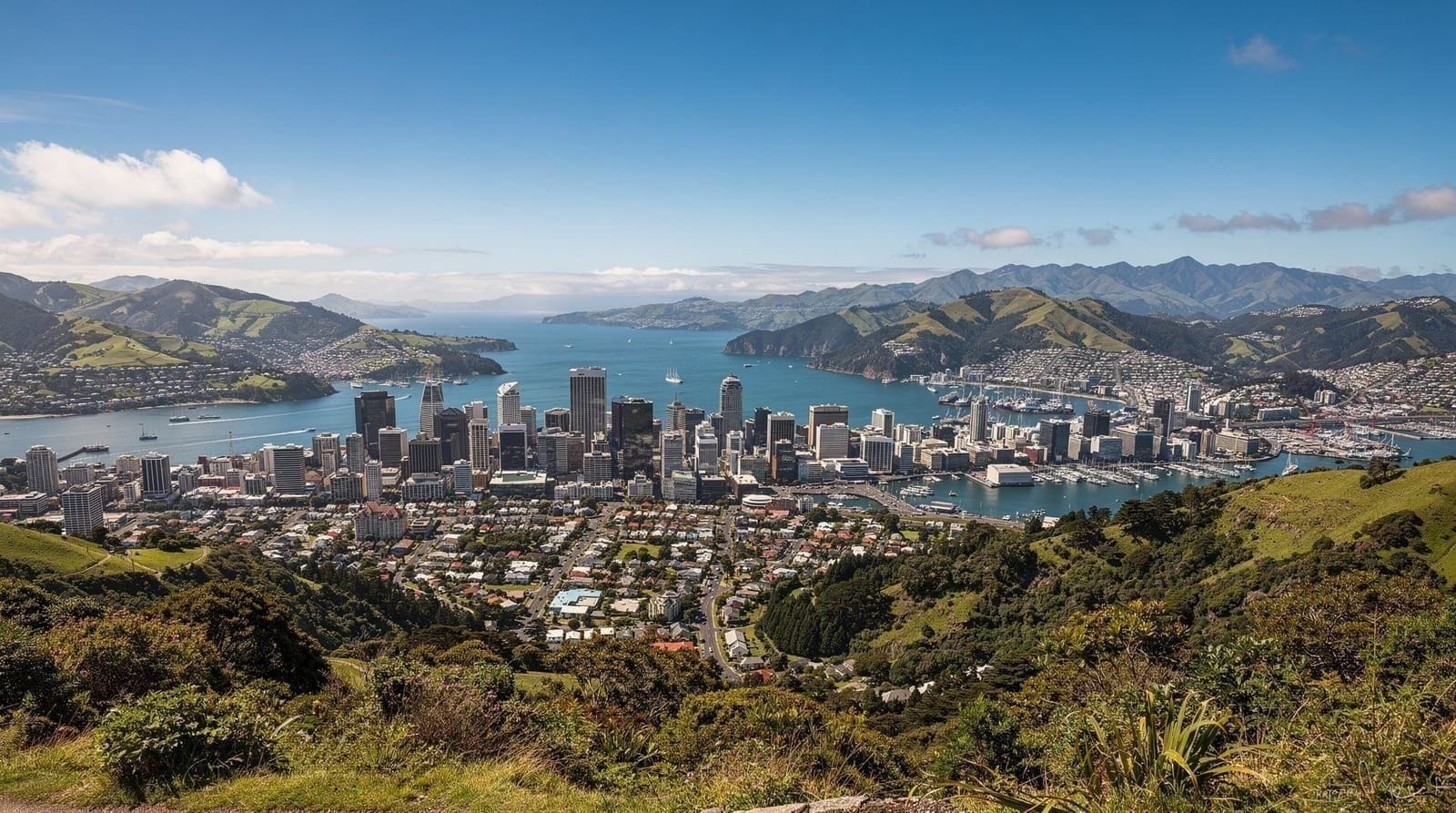
Wind exposure varies dramatically by street, and knowing the pattern helps you route around the worst of it. The open waterfront esplanade and Frank Kitts Park catch the wind coming straight off the harbour with nothing to break it. Lambton Quay’s taller buildings create genuine wind-tunnel effects at several intersections, funnelling and accelerating gusts between buildings in a way that can feel stronger than the open harbour itself. Exposed lookouts — Mount Victoria’s summit, part of the wider Mount Victoria reserve, chief among them — are dramatically windier than the sheltered streets below, worth knowing before you commit to a summit visit on a forecast-windy day. By contrast, Cuba Street and much of Te Aro sit in a slight valley that offers real shelter, and it’s noticeably calmer there than a five-minute walk toward the water would suggest.
What to pack
Skip the umbrella entirely — it’s close to useless in genuine Wellington wind and often becomes a liability, turning inside out or becoming a projectile in a strong gust. A proper hooded, windproof, waterproof rain jacket is the single most useful item you can pack, doing the job an umbrella can’t in wind this strong. Layer clothing so you can adjust quickly as you move between sheltered and exposed streets, since the temperature difference alone can feel significant. Secure or skip loose hats — a cap with a drawstring or a beanie holds up far better than a wide-brim hat that will end up in your hands within the first block. Tie back or tuck away long hair, and think twice before wearing a skirt or loose dress on a forecast-windy day, particularly around the notoriously gusty corner outside the old BNZ building on Lambton Quay, a spot locals have joked about for decades.
Neighbourhood by neighbourhood
Beyond the waterfront and Lambton Quay, it’s worth knowing how the rest of the CBD fares. Oriental Bay’s promenade is nearly as exposed as the main waterfront strip, given its direct harbour frontage, though the beach itself sits in a slight curve that offers marginally more shelter than the open esplanade further along. Cuba Street and Te Aro, as mentioned, sit in genuine shelter and are consistently the calmest part of the central city on a bad-wind day — worth defaulting to for a café stop or a wander if the forecast looks rough. Thorndon and the parliamentary precinct sit slightly elevated and catch a moderate amount of wind, less than the waterfront but more than Cuba Street. Miramar and the Weta Workshop district, being suburban rather than harbourfront, are generally calmer than the CBD’s most exposed stretches, though the drive out via the airport corner can be notably blustery on a stormy day.
How locals actually deal with it
Wellingtonians treat wind less as weather to complain about and more as background information that shapes small daily decisions. Locals check the wind forecast the way visitors from other cities might check for rain, and they route accordingly — walking via Cuba Street rather than the waterfront on a bad day, timing a Mount Victoria visit for a calmer forecast window, and keeping a proper rain jacket in the car or bag as a matter of habit rather than an occasional precaution. None of this requires special local knowledge to copy; it’s simply a mindset shift from “check if it will rain” to “check how hard it will blow,” which becomes second nature after a day or two in the city.
Wind and your hair, clothes and gear
A handful of small, practical adjustments make a genuine difference. Tie back long hair before heading out on a forecast-windy day rather than fighting it all afternoon. Skirts and loose dresses are workable but worth a second thought on the most exposed streets, particularly around Lambton Quay’s wind-tunnel corners. Camera gear and phones are fine to use outdoors, but a wrist strap or cross-body bag is a sensible precaution near the harbour edge, where a sudden gust has, on rare occasions, taken a loosely held phone into the water. Sunglasses do double duty as eye protection against wind-blown grit on the waterfront, useful even on an overcast day.
Does the wind affect specific activities?
Yes, unevenly. Harbour ferries to Days Bay and Matiu/Somes Island can see delays or cancellations on the roughest days, since operators prioritise safety over schedule. Scenic flights and helicopter tours are the most weather-sensitive bookings in the city, and operators typically build in a rebooking rather than refund-only policy for exactly this reason — worth confirming before you pay in full. The cable car itself runs regardless of wind, being a mechanically simple funicular rather than an aerial cableway, so it’s one of the more weather-reliable attractions on a genuinely blustery day. Walking tours and outdoor food tours generally proceed as scheduled but may adjust the route to favour sheltered streets.
Why locals joke about it rather than complain
There’s a distinctly Wellington attitude toward the wind that’s worth adopting as a visitor rather than fighting: it’s a running joke as much as a genuine grievance. Locals swap stories about inverted umbrellas found abandoned in bins around the CBD, about the specific Lambton Quay corner outside the old BNZ building that’s been notorious for decades, and about visiting friends who arrived sceptical of the reputation and left believers within a day. Leaning into this — treating a sudden gust as part of the city’s character rather than a personal inconvenience — genuinely improves the experience of visiting, in the same way locals in a rainy city learn to enjoy rather than resent the rain. It’s one small part of the honest, no-nonsense tone this site tries to take throughout — see our Wellington tourist traps guide for the same practical, unglamorous honesty applied to spending rather than weather.
A realistic windy-day itinerary
Rather than fighting a bad forecast, the more workable approach is to swap your day’s plan around it. On a forecast-windy morning, favour indoor and semi-sheltered options — Te Papa, the Weta Workshop, a leisurely Cuba Street café crawl — and save exposed viewpoints and harbour walks for whichever part of the day, or the trip, looks calmer. If Mount Victoria or the waterfront are non-negotiable parts of your itinerary, checking the hour-by-hour forecast rather than the daily summary often reveals a calmer window even within an overall windy day, particularly early morning before an afternoon system arrives.
Building the wind into your wider trip planning
If wind tolerance genuinely worries you, it’s worth factoring into which season you choose rather than treating it as a fixed feature of any Wellington trip. Our Wellington in autumn guide remains the strongest all-round recommendation on this site partly because autumn’s wind is a fraction of spring’s. If your dates are fixed and happen to fall in spring, building flexibility into your day-to-day plan — swapping an exposed activity for an indoor one when the forecast looks bad, rather than sticking rigidly to a pre-planned itinerary — does more to improve your experience than any single piece of gear. Our realistic Wellington trip budget guide also flags wind-related cancellations and rebooking policies as a genuine cost consideration for outdoor tours, worth reading alongside this guide if you’re booking scenic flights, helicopter tours or harbour cruises during a windier stretch of the calendar.
Is the wind ever dangerous?
For a pedestrian taking sensible precautions, genuinely rare — Wellington’s wind is disruptive and occasionally comical (locals have their own stock of stories about being blown sideways or losing a hat to the harbour) rather than hazardous under normal circumstances. The real risks are secondary: loose debris becoming a projectile in a severe gust, difficulty crossing exposed intersections safely in the strongest storms, and the previously mentioned near-total uselessness of umbrellas, which can injure someone nearby if it inverts and takes flight. Severe weather warnings, when issued, are worth taking seriously and adjusting plans around rather than pushing through regardless.
Photography in the wind
If photography is part of your trip, the wind is worth planning around rather than ignoring. Tripod-based long-exposure shots are genuinely difficult on an exposed waterfront on a blustery day, since even a sturdy tripod can vibrate enough to blur a long exposure — bracing against a wall or shooting from a more sheltered angle helps. On the upside, windy days often clear the air of haze, producing some of the sharpest, clearest harbour views of the year once you find a stable, sheltered vantage point to shoot from, and the wind itself makes for dynamic, characterful shots of the harbour’s waves and any flags or sails caught mid-motion.
A final word on expectations
None of this guide is meant to talk anyone out of a Wellington trip — the wind is a genuine, well-documented feature of the city’s climate, not a reason to avoid it. Visitors who arrive with realistic expectations and a proper rain jacket rather than an umbrella consistently report the wind as a memorable, character-adding quirk rather than a genuine problem, in much the same way visitors to a notably rainy or notably hot city adjust their packing and pace without it overshadowing the trip. Treat this guide as preparation, not a warning sign.
A full packing checklist beyond the basics
Beyond the hooded rain jacket already covered, a few smaller items make a genuine difference across a full trip. A cross-body or zippered bag beats an open tote for anything you’re carrying on an exposed street, since a sudden gust can otherwise tip loose contents out. Lip balm and moisturiser are worth packing, since wind dries out skin faster than most visitors expect, even outside winter. A lightweight beanie packs small and holds up far better than a wide-brim hat. Our dedicated packing list for Wellington’s wind goes further into a full trip’s clothing list if you want a complete packing rundown rather than the wind-specific highlights covered here.
It’s worth packing this gear regardless of which season you’re travelling in, rather than assuming a summer or autumn trip lets you skip it entirely. Even the calmer seasons produce the occasional genuinely blustery day, and a visitor caught without a proper jacket on that one afternoon has a considerably worse time than one who packed for the city’s reputation rather than a specific forecast. Suitcases with limited space should still prioritise the rain jacket over any other single wind-related item — everything else on this list is a smaller, secondary comfort improvement rather than a genuine necessity.
What still runs on a genuinely windy day
Most of Wellington’s indoor and near-indoor attractions carry on regardless of the forecast. Te Papa is entirely unaffected, and the Wellington Cable Car ticket — a mechanically simple funicular rather than an aerial ride — keeps running through all but the most extreme storms, as covered above. Cuba Street’s cafés, bars and shops, sitting in genuine shelter, are a reliable fallback plan for a windy afternoon, and a harbour kayaking session run by an experienced operator will typically be rescheduled rather than cancelled outright if conditions turn, since operators plan around exactly this kind of day. If you’d rather book something guaranteed to run regardless of wind, the Wellington Cable Car return ticket is one of the safest bets in the city.
Frequently asked questions about Wellington’s wind
Is Wellington really windier than other cities its size?
By most standard meteorological measures, yes — it’s frequently cited among the windiest cities in the world for its size, a direct consequence of its position at the narrow southern end of Cook Strait, which funnels and accelerates weather systems moving through the strait.
What’s the windiest time of year to visit?
Spring, particularly September and October, is typically the peak. Summer and autumn are comparatively calm; winter brings strong wind but alongside rain and cold rather than as the single defining feature of the season.
Should I bring an umbrella to Wellington?
No — it’s genuinely one of the least useful items you can pack for this city. A proper hooded, windproof rain jacket does the job an umbrella can’t, and most locals don’t bother with umbrellas at all.
Which streets or areas should I avoid on a windy day?
The open waterfront esplanade, several wind-tunnel intersections along Lambton Quay, and exposed lookouts like Mount Victoria’s summit all feel the wind most acutely. Cuba Street and much of Te Aro sit in comparative shelter and are a better bet for a windy-day walk.
Can the wind cancel tours or activities?
Yes, particularly scenic flights, helicopter tours and harbour ferries, all of which prioritise safety over schedule on the roughest days. Booking with an operator that offers rebooking rather than only a refund is a sensible precaution, especially in spring.
Does the cable car stop running in strong wind?
Rarely — the Wellington Cable Car is a ground-based funicular railway rather than an aerial cableway, so it’s mechanically far less wind-sensitive than a gondola or chairlift would be, and it typically keeps running through all but the most extreme storm conditions.
Does the wind affect the whole city equally, or just certain spots?
It affects the whole city to some degree, but very unevenly — exposed harbourfront and elevated lookouts feel it far more acutely than sheltered inner-city valleys like Cuba Street and Te Aro. Knowing this pattern lets you route around the worst of it on any given day rather than assuming the whole city is equally affected.
Does the wind ever cause actual property damage or serious disruption?
On the rare severe-storm day, yes — falling branches, disrupted ferry sailings and, occasionally, temporary road closures on exposed routes like the Remutaka Range can occur. These events are infrequent rather than routine, and civil authorities issue clear severe weather warnings well ahead of the worst systems, which are worth checking and heeding if one is issued during your visit.
Is it true Wellington has a specific corner famous for its wind?
Yes — the intersection outside the old BNZ building on Lambton Quay has a long-standing local reputation as one of the single windiest spots in the CBD, thanks to the wind-tunnel effect created by the surrounding tall buildings. It’s a recurring subject of local jokes rather than a hazard, but worth holding onto your hat if you’re walking through it on a blustery day.
Can I check the wind forecast before committing to an outdoor activity?
Yes — checking an hour-by-hour forecast rather than a daily summary is the single most useful habit a visitor can adopt, since a genuinely windy day often still has a calmer early-morning window before an afternoon system arrives. This matters most for exposed activities like a Mount Victoria lookout visit or the full extended waterfront walk, both of which are considerably more pleasant on a calmer forecast window than pushed through regardless.
Does wind tolerance vary by trip type — should families plan differently?
Somewhat, yes. A loose pushchair or a small child on an exposed waterfront stretch is a real, if minor, hazard on the windiest days, so families visiting with young kids benefit more than most from favouring sheltered streets like Cuba Street and saving exposed lookouts for a calmer forecast window. See our Wellington with kids guide for the fuller family-specific planning picture.