Wellington neighbourhoods guide
Wellington: Guided City Tour with Cable Car Ticket
Duration: 3h
What are Wellington's main neighbourhoods for visitors?
Cuba Street and Te Aro (café culture, nightlife, independent shops), Oriental Bay (harbour beach, relaxed evenings), Miramar (Weta Workshop and film heritage), Thorndon (heritage streets, Parliament), and Lambton Quay/the CBD core (business, retail, Te Papa and the cable car).
Wellington is a city of distinct, walkable neighbourhoods
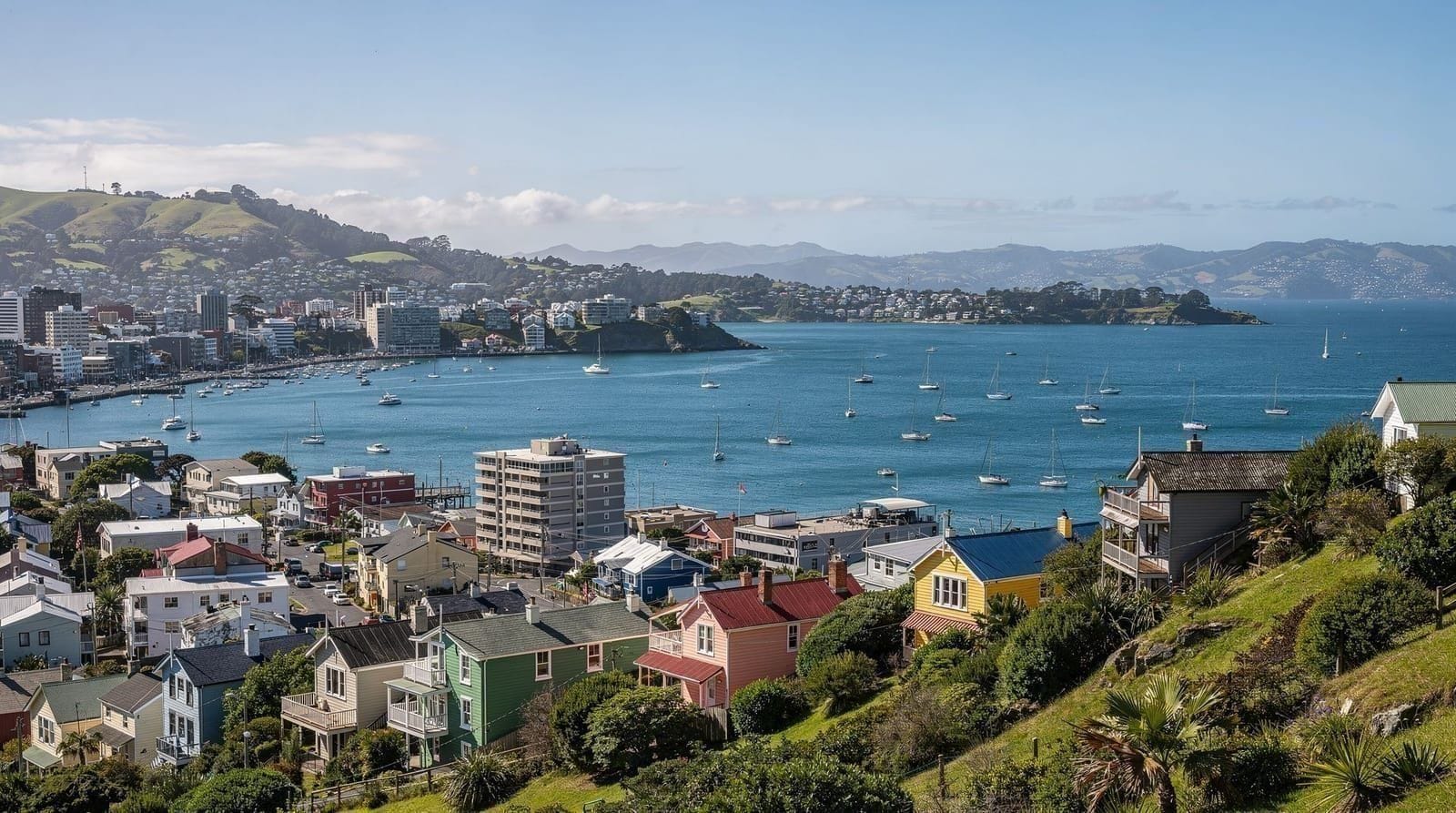
Despite its compact overall size, Wellington breaks down into genuinely distinct neighbourhoods, each with its own character, rather than reading as a single undifferentiated CBD. Understanding how these areas relate to each other — geographically and in terms of atmosphere — makes it considerably easier to decide where to base yourself and how to structure your sightseeing. This guide covers the key areas visitors actually spend time in, roughly in order of how central and essential each one is to a typical visit.
| Best base for first-timers | CBD core / edges of Te Aro |
| Best for nightlife | Cuba Street and Te Aro |
| Best for a relaxed pace | Oriental Bay |
| Best for film fans | Miramar |
| Getting between areas | Mostly walkable; Miramar, Karori, Newtown need a bus |
Neighbourhoods at a glance
| Neighbourhood | Character | Best for | From CBD |
|---|---|---|---|
| CBD / Lambton Quay | Commercial, connecting hub | Cable car, Te Papa access | — |
| Cuba Street / Te Aro | Bohemian, café and bar scene | Food, drink, nightlife | Walkable |
| Oriental Bay | Relaxed, harbourside | Evening walks, a swim | Short walk/bus |
| Miramar | Film-industry suburb | Weta Workshop | 15-20 min bus |
| Thorndon / Kelburn | Heritage, government precinct | History, Botanic Garden | Walkable/cable car |
| Karori | Residential | Zealandia | 15-20 min bus |
| Newtown | Diverse food scene | The zoo | 15-20 min bus |
The CBD core and Lambton Quay
Wellington’s central business district, anchored by Lambton Quay, is the city’s commercial and retail spine, home to the cable car’s lower terminal, most of the CBD’s office towers, and a conventional mix of chain retail and services. It’s less atmospheric than Cuba Street or Oriental Bay, but practically important as the connecting point between most of the city’s other neighbourhoods and the starting point for the Wellington Cable Car.
Te Aro and Cuba Street
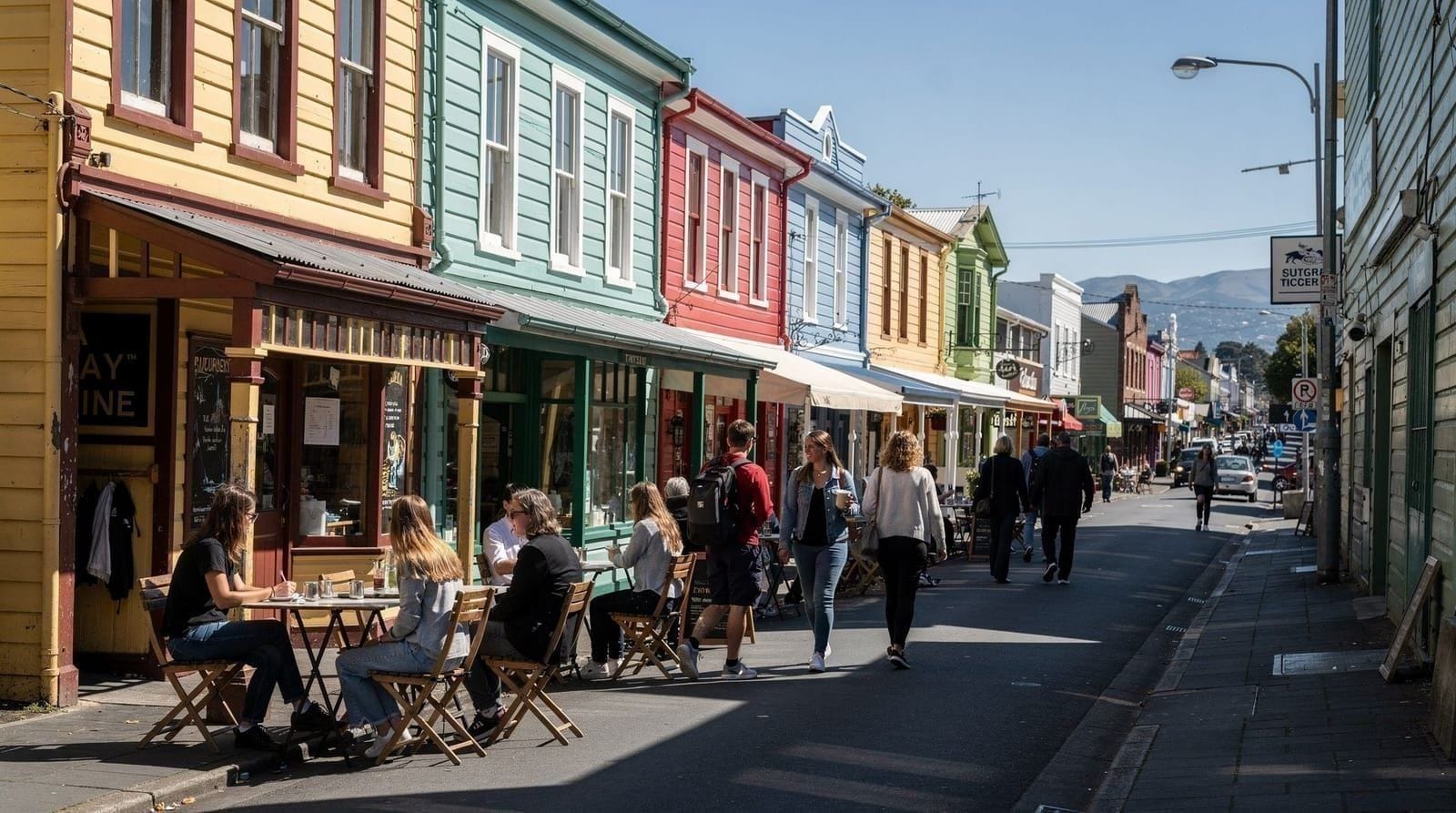
Cuba Street and the wider Te Aro neighbourhood form Wellington’s bohemian, creative heart — café culture, craft beer, independent retail and street art concentrated along a genuinely walkable strip. Our dedicated Cuba Street guide covers this area in full detail; within the context of choosing where to spend time or stay, it’s the strongest single neighbourhood for visitors prioritising food, drink and atmosphere over quiet or scenery.
Oriental Bay
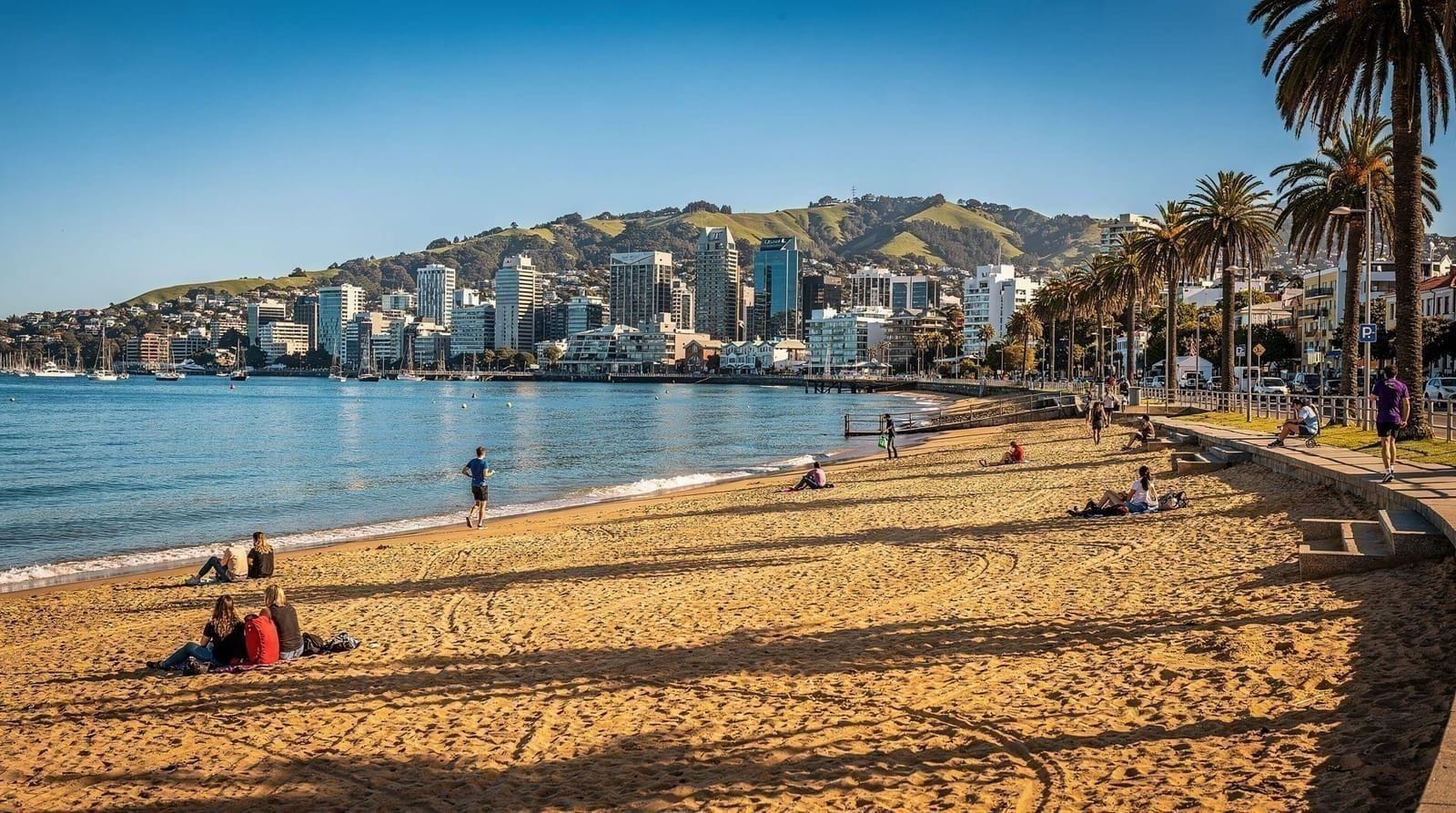
Oriental Bay, a short walk or bus ride from the CBD, is Wellington’s closest equivalent to a city beach — a genuinely relaxed, sea-facing strip of sand, cafés and waterfront apartments that offers a slower pace than Cuba Street’s livelier atmosphere. It’s particularly worth an evening visit, when the setting sun catches the water and the surrounding hillside houses above the bay.
Miramar and the Weta film district
Miramar, on the eastern side of the Wellington peninsula, is the city’s film-industry suburb, home to Weta Workshop and several other production facilities tied to the Lord of the Rings and wider New Zealand film industry. Our Weta Workshop guide and miramar film tour guide cover the area’s specific attractions; for visitors without a strong film interest, Miramar is genuinely skippable without loss to the wider trip.
Thorndon and Kelburn
Thorndon, just north of the CBD, carries some of Wellington’s best-preserved nineteenth-century heritage streets, including Katherine Mansfield House and Old St Paul’s, alongside Parliament and the government precinct. Kelburn, reached via the cable car, is home to the Botanic Garden and Victoria University, giving the area a genuinely different, quieter residential character than the busier CBD below.
Karori
Karori, a short bus ride from the CBD, is best known to visitors as the home of Zealandia, the fenced ecosanctuary protecting native bush and wildlife. Beyond Zealandia itself, Karori is a largely residential suburb without significant additional visitor attractions, making it a destination for this one specific reason rather than a neighbourhood to explore more broadly.
Newtown
Newtown, south of the CBD, is home to Wellington Zoo and a genuinely diverse, multicultural food scene reflecting the suburb’s history as a settlement point for various immigrant communities. It’s less visited by short-stay tourists than Cuba Street or the waterfront, but rewards a specific trip if the zoo or a particular restaurant draws you there.
Thorndon in more depth
Thorndon rewards visitors willing to slow down and walk its heritage streets rather than pass through en route to Parliament. Katherine Mansfield House, the birthplace of New Zealand’s best-known short-story writer, and Old St Paul’s, a wooden Gothic Revival church, both sit within a few minutes’ walk of each other, and a visit to the Parliament and Beehive rounds out a genuinely worthwhile heritage half-day without needing to venture far from the CBD’s northern edge.
Kelburn and the Botanic Garden
Kelburn, reached via the cable car, is home to the Wellington Botanic Garden and Victoria University, and it’s one of the easiest “different neighbourhood” experiences to fold into a short visit, since the cable car ride itself takes only a few minutes from the CBD core. The Garden’s paths connect back down toward Thorndon on foot for visitors who’d rather walk one way than ride the cable car twice.
How the neighbourhoods connect
Most of Wellington’s key visitor neighbourhoods sit within a 20-30 minute walk or a short bus ride of each other, making it entirely realistic to cover several in a single day without needing a rental car. The CBD core functions as the natural hub connecting Te Aro/Cuba Street, Thorndon/Kelburn, and the waterfront toward Oriental Bay, while Miramar, Karori and Newtown each require a deliberate bus or taxi trip given their greater distance from the centre.
Where to stay for a short visit
For a one- to three-day visit, basing yourself in or near the CBD core, Lambton Quay, or the edges of Te Aro puts you within easy reach of Te Papa, the cable car, and Cuba Street, minimising transfer time across a short stay. Oriental Bay is a reasonable alternative if you’d rather wake up near the water, at the cost of a slightly longer walk back into the CBD each day. Our where to stay in Wellington guide goes deeper into specific accommodation trade-offs between these areas.
Neighbourhoods for a longer stay
Visitors staying four or more nights have more reason to consider a neighbourhood beyond the CBD core, since the novelty of a longer stay can accommodate a slightly less central base in exchange for a different daily atmosphere — Oriental Bay for a beachfront feel, or Thorndon for a quieter, more residential pace within still-easy walking distance of the CBD’s core attractions.
A single guided option covering several neighbourhoods
If you’d rather have a guide stitch several of these areas together than navigate between them yourself, this guided city tour with cable car ticket covers the CBD core, cable car terminal and central sightseeing in a single outing, giving a useful orientation before you explore Cuba Street, Oriental Bay or Miramar independently later in your trip.
Neighbourhood character and Wellington’s overall identity
Part of what makes Wellington distinctive as a city is how much its character varies across these relatively short distances — a genuinely bohemian, independent retail strip within a 10-minute walk of a conventional CBD business district, itself within a similar distance of a relaxed beachfront neighbourhood. Few cities Wellington’s size pack this much variety into such a compact geographic footprint, and understanding the neighbourhoods individually gives a much better sense of the city than treating it as a single undifferentiated “downtown.”
Safety across different neighbourhoods
Wellington overall carries a low crime rate against tourists, but the usual big-city caution applies more in specific pockets — Courtenay Place and the wider nightlife strip late at night warrant the same care you’d apply in any city’s bar district, while residential Thorndon, Kelburn and Oriental Bay are generally quiet even after dark. No neighbourhood covered here requires special avoidance, but basic city awareness (sticking to well-lit main streets late at night, being mindful of belongings in busier tourist areas) is sensible practice throughout.
Eating your way through the neighbourhoods
Rather than settling on one neighbourhood for every meal, Wellington rewards spreading your dining across a few different areas over a multi-day visit — Cuba Street’s café-and-craft-beer scene for a lively lunch or evening out, Oriental Bay for a relaxed breakfast or brunch with a view, and Newtown’s genuinely diverse food scene if you want something different from the CBD’s more predictable options. Our best restaurants in Wellington guide and cheap eats in Wellington piece both draw on specific spots across several of these neighbourhoods rather than concentrating recommendations in a single area.
Neighbourhoods and Wellington’s film heritage
Beyond Miramar’s obvious Weta Workshop connection, several other neighbourhoods carry their own, less prominent links to the Lord of the Rings trilogy’s production — Mount Victoria and parts of the CBD’s older streets were scouted or used for specific establishing shots, and the wider Hutt Valley beyond the city itself hosted several outdoor filming locations. Our Lord of the Rings filming locations guide maps these connections across the wider region rather than treating Miramar as the sole film-heritage neighbourhood.
Neighbourhoods for families
Families travelling with children generally find the CBD core and Oriental Bay the most practical bases, given their proximity to Te Papa, the cable car and a genuinely relaxed beachfront for younger kids to burn off energy. Newtown’s zoo is a worthwhile specific destination but less practical as a base neighbourhood given its distance from the CBD’s other core attractions. Our Wellington with kids guide covers neighbourhood choice specifically from a family-travel perspective.
Getting between neighbourhoods without a car
Metlink’s bus network connects all of the neighbourhoods covered in this guide, and the CBD core itself, along with Te Aro and the waterfront toward Oriental Bay, are comfortably walkable without needing any transport at all. Miramar, Karori and Newtown each warrant a 15-20 minute bus ride rather than a walk, given their distance from the centre. See our getting around Wellington guide for specific routes and fares, and do you need a car in Wellington if you’re deciding whether a rental adds enough value to justify the cost for a neighbourhood-hopping visit.
First-timers versus repeat visitors
First-time visitors generally get the most value from concentrating on the CBD core, Cuba Street/Te Aro, and Oriental Bay, since these three neighbourhoods together cover the majority of Wellington’s essential sightseeing, food and atmosphere. Repeat visitors, or those on a longer stay, have more reason to venture into Miramar, Karori, Newtown or Thorndon for their more specific, singular draws rather than a broad range of attractions. Our Wellington first-timer’s guide builds on this same neighbourhood logic for visitors planning their first trip.
Neighbourhoods worth a dedicated half-day
If your schedule allows dedicated time beyond the core three neighbourhoods, Thorndon rewards a slow half-day wander through its heritage streets, Parliament grounds and Katherine Mansfield House, while Miramar suits a half-day built specifically around Weta Workshop and the surrounding film locations. Neither is essential to a good Wellington visit, but both offer a genuinely different pace and focus than the CBD core’s busier, more concentrated sightseeing.
How the neighbourhoods reflect Wellington’s broader history
Each of Wellington’s key neighbourhoods carries a distinct thread of the city’s development. Thorndon preserves the earliest colonial-era settlement pattern, with narrow streets and timber cottages surviving from the nineteenth century in a way the more heavily redeveloped CBD core doesn’t. Te Aro and Cuba Street’s bohemian character grew out of a specific mid-to-late-twentieth-century wave of artists and independent businesses taking advantage of lower rents in what was then a less fashionable part of the city, a pattern that’s since become central to Wellington’s broader cultural identity rather than a niche subculture. Newtown’s diversity reflects successive waves of immigration settling around what was historically a more affordable, working-class part of the city. Understanding these threads adds genuine depth to a neighbourhood walk beyond simply noting the different atmosphere from one area to the next.
Weekend versus weekday character
Several of Wellington’s neighbourhoods shift noticeably in character between weekdays and weekends. The CBD core, driven heavily by office workers, is considerably quieter on weekends than weekdays, while Cuba Street and Oriental Bay see the opposite pattern, busier on weekend afternoons and evenings when locals and visitors alike have more free time to spend in either area. If you’re planning a visit around a specific day of the week, it’s worth factoring this into which neighbourhood you prioritise on which day — a weekday CBD wander might feel comparatively subdued, while the same day on Cuba Street still holds a reasonable atmosphere given its less office-dependent customer base.
Neighbourhoods and Wellington’s craft-beer and coffee scenes
While Cuba Street anchors the densest concentration of both scenes, several other neighbourhoods host genuinely worthwhile individual spots — a well-regarded roaster or brewery tucked into an otherwise residential part of Thorndon or a quieter Te Aro side street, for instance, rewarding visitors willing to walk slightly beyond the main strip. Our Wellington coffee capital guide and craft-beer trail both note which specific spots sit outside the main Cuba Street cluster if you want to explore beyond the most obvious concentration.
Choosing a neighbourhood base around your trip’s focus
If your Wellington visit centres specifically on film heritage, basing yourself closer to Miramar (or accepting a slightly longer daily commute into the CBD) may make more practical sense than the standard CBD-core recommendation. Wine-focused visitors extending into Martinborough might prefer a base with easier road access out of the city, while wildlife-focused visitors prioritising Zealandia and Kāpiti Island benefit from a base with reasonable bus access toward Karori and the northern routes out of town. Matching your accommodation neighbourhood to your trip’s actual focus, rather than defaulting automatically to the CBD core, is worth considering if you have a strong, specific priority for your visit.
Common mistakes when planning around neighbourhoods
A frequent mistake is trying to cover too many outlying neighbourhoods — Miramar, Karori and Newtown together, for instance — within a single short trip, underestimating the cumulative transfer time each one adds. Given each of these areas is a genuine 15-20 minute bus ride from the centre in a different direction, stacking more than one or two into the same day often means more time spent commuting between them than actually experiencing what each has to offer. A second common mistake is assuming the CBD core deserves the bulk of sightseeing time simply because it’s the default arrival point — in practice, Cuba Street, Oriental Bay and the waterfront generally reward more time than the CBD’s more conventional business district, which functions better as a connecting point than a destination in its own right.
The bottom line
Wellington’s neighbourhoods each bring something genuinely different to a visit — Cuba Street and Te Aro for atmosphere and food, Oriental Bay for a relaxed harbour-side pace, Miramar for film heritage, and Thorndon and Kelburn for heritage and gardens. For a short visit, basing yourself centrally and exploring outward covers the essentials efficiently; for a longer stay, deliberately choosing a neighbourhood beyond the CBD core adds a dimension a purely central visit would miss. Our Wellington in 2 days itinerary and Wellington hidden gems guide both build on this same neighbourhood logic if you’re ready to move from choosing a base to planning the actual days.
Frequently asked questions about Wellington neighbourhoods guide
Which Wellington neighbourhood is best for a first-time visitor to stay in?
The CBD core around Lambton Quay or the edges of Te Aro/Cuba Street puts you within walking distance of Te Papa, the cable car and the waterfront, making it the most practical base for a short first visit.Is Cuba Street or Oriental Bay better for nightlife?
Cuba Street has the wider range of bars and later-opening venues; Oriental Bay is quieter and better suited to a relaxed evening drink with a harbour view rather than a full night out.Do I need to visit Miramar if I'm not a Lord of the Rings fan?
Not necessarily — Miramar's main draw is Weta Workshop and the film heritage trail. Visitors without a specific interest in film can skip it without missing anything essential to the wider Wellington visit.Which Wellington neighbourhoods can I realistically walk between?
The CBD core, Cuba Street/Te Aro, the waterfront and Oriental Bay are all comfortably walkable from each other. Miramar, Karori and Newtown each require a 15-20 minute bus ride given their distance from the centre.Is Thorndon worth visiting beyond Parliament?
Yes — Thorndon's heritage streets, Katherine Mansfield House and Old St Paul's reward a slow half-day wander and sit within easy walking distance of each other, making it a worthwhile addition beyond a quick Parliament photo stop.