How windy is Wellington, really?
Yes, it’s genuinely one of the windiest cities on earth
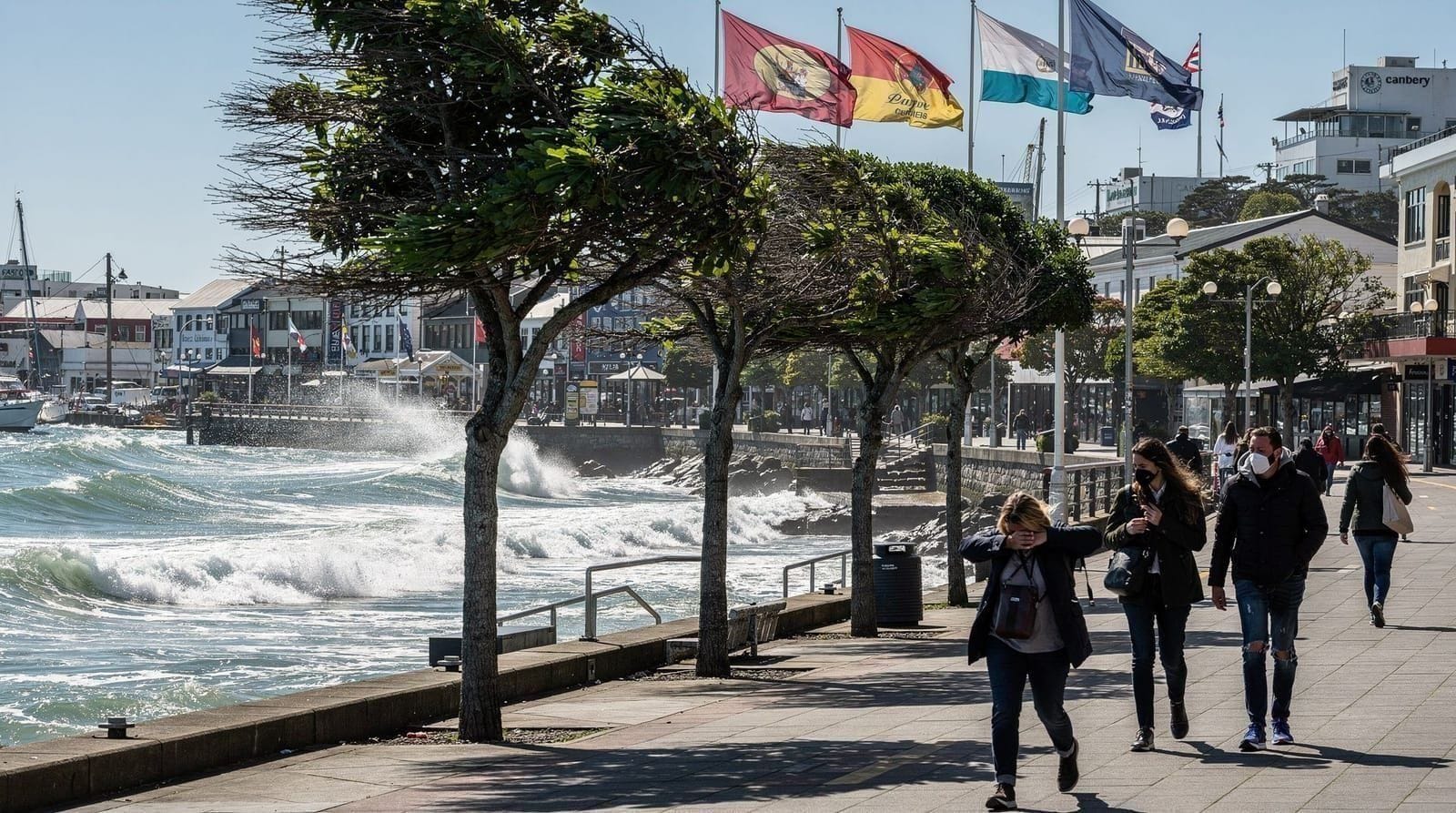
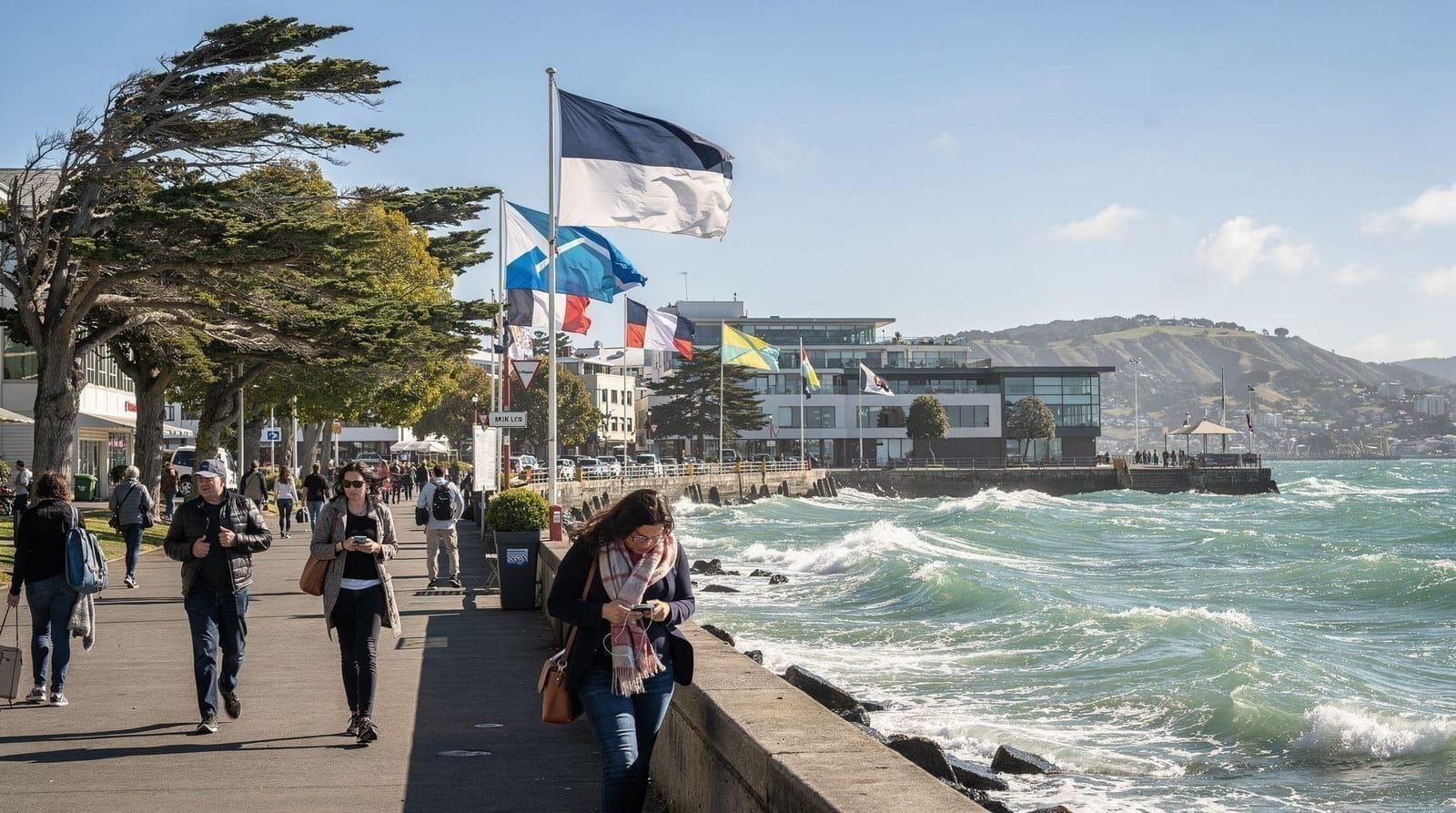
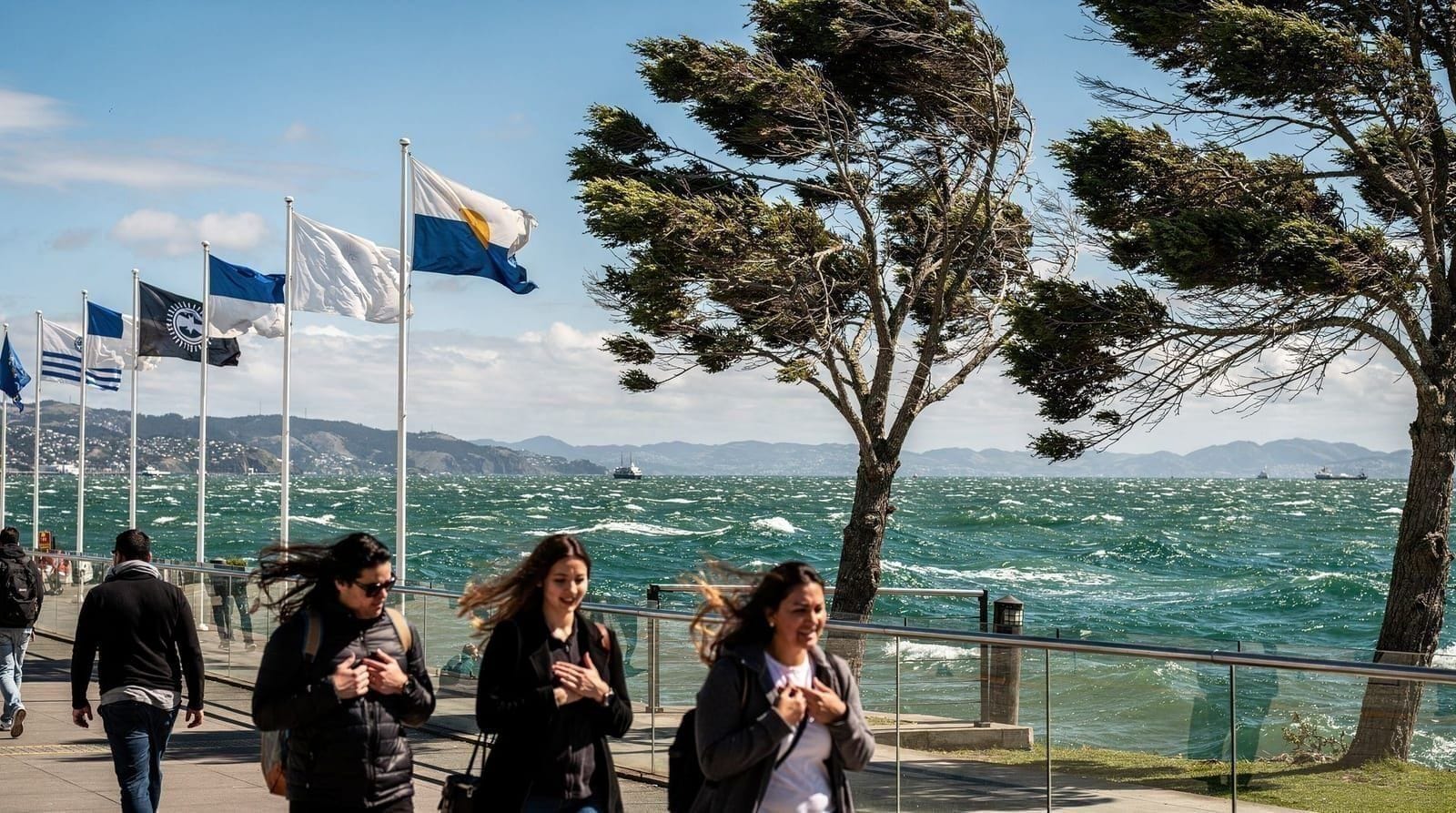
Wellington’s nickname isn’t a tourism slogan — average wind speeds here are consistently cited among the highest of any city in the world, with gusts regularly strong enough to make umbrellas useless and occasionally strong enough to make walking briefly awkward on the more exposed streets. It’s a structural feature of the local geography, not an occasional weather event, and it should genuinely factor into how you pack and plan rather than being dismissed as exaggeration.
| Why | Cook Strait funnels prevailing westerlies/southerlies through the harbour |
| Worst months | Spring (Sep-Nov), some summer nor’westers |
| Calmest months | Autumn (Mar-May) |
| Most exposed spots | Cable car summit, Mount Victoria, waterfront |
| What to pack | Wind-resistant layer over a heavy coat; skip the umbrella |
Wind by season
| Season | Wind level | Notes |
|---|---|---|
| Spring (Sep-Nov) | Highest | Most consistently windy season of the year |
| Summer (Dec-Feb) | Moderate, variable | Occasional strong nor’wester after a still morning |
| Autumn (Mar-May) | Lowest | Calmest season, also the best overall visiting window |
| Winter (Jun-Aug) | Moderate-high | Less frequent but often colder, more bitter southerlies |
Our season-specific guides — Wellington in spring, summer, autumn and winter — cover the fuller weather picture beyond wind alone for whichever window you’re planning around.
Why Wellington is so windy in the first place
The city sits directly on Cook Strait, the narrow, funnel-shaped gap between New Zealand’s North and South Islands, and that gap accelerates prevailing westerly and southerly winds the same way a nozzle speeds up a hose. Add Wellington’s harbour-and-hills topography — a compact CBD squeezed between steep terrain and open water — and wind that would simply blow past a flatter city instead gets channelled straight through the streets, waterfront and harbour. It’s the same strait that Cook Strait ferries cross to reach Picton, and rough crossings during stronger weather systems are a direct consequence of the same geography.
How strong the wind actually gets
On an average day, expect a noticeable, persistent breeze rather than anything alarming — the kind that keeps hair and loose clothing constantly in motion but doesn’t interfere with a normal day of sightseeing. Several times a month, particularly during spring and the shoulder seasons, gusts strong enough to affect balance on exposed corners or the waterfront are common, and locals treat a strong southerly with the same casual acceptance most cities reserve for ordinary rain. Genuinely dangerous wind events — strong enough to close the cable car or disrupt ferry sailings — happen occasionally rather than routinely, but they’re not rare either.
Which months are worst
Wind is a near-constant feature year-round, but it’s most consistently strong through spring (September-November) and can also pick up in summer afternoons, when a strong nor’wester sometimes rolls in after a still, warm morning. Autumn (March-May) — already the recommended season for the best overall weather balance — tends to bring somewhat calmer conditions than spring, one more reason it edges out summer and spring as the best time to visit. Winter brings its own cold southerlies, less frequent but often more bitter than the wind experienced the rest of the year.
What the wind actually does to a day of sightseeing
The Wellington Cable Car and Mount Victoria’s lookout are the two most exposed popular attractions, and both are noticeably windier at the top than at street level — worth knowing before you’re standing at either in shorts and a t-shirt. The waterfront, particularly around Frank Kitts Park and Queens Wharf, funnels wind straight off the harbour, so a coffee stop there on a blustery day is a different experience than the same coffee in a sheltered Cuba Street laneway. Outdoor dining and any rooftop bar in the city carries the same caveat — check the forecast before planning an outdoor evening rather than assuming still conditions.
How it affects the Cook Strait ferry
Strong wind and swell across Cook Strait occasionally delay or cancel Interislander and Bluebridge sailings, most commonly during significant weather systems in winter and spring rather than as a routine occurrence. If your schedule is tight around a ferry crossing to Picton, building in a spare few hours either side of your booked sailing is sensible rather than assuming departure times are guaranteed regardless of weather — see our Cook Strait ferry tips for the fuller planning detail.
What to actually pack
A genuinely wind-resistant outer layer matters far more here than a heavy coat rated for cold temperatures — Wellington’s air temperature is often perfectly mild even when the wind makes it feel considerably colder. Umbrellas are close to useless on a windy day and locals mostly skip them entirely in favour of a hood or cap with a secure chin strap; a loose sun hat is one of the more common items lost to the wind on the waterfront. Layers you can add and remove easily work better than a single heavy garment, since Wellington’s wind and sun can shift a felt temperature by several degrees within the same afternoon.
Does the wind actually ruin a visit?
For most visitors, no — it’s an atmospheric quirk that adds character rather than a genuine obstacle to enjoying the city, and locals generally treat it with a shrug rather than real complaint. Travellers who are especially sensitive to strong wind, or who are planning a lot of outdoor photography, boat trips or rooftop dining, should build in some flexibility and a plan B for particularly blustery days rather than assuming still conditions throughout a short visit. It rarely rains as much as the wind might suggest, and Wellington’s overall climate is genuinely mild by New Zealand standards once you’ve packed for the wind specifically — our is Wellington worth visiting piece weighs the wind against the city’s other strengths in more depth.
The honest comparison to other windy cities
Wellington regularly appears alongside Chicago in “windiest city” comparisons, and while Chicago’s nickname is more about 19th-century politics than actual meteorology, Wellington’s is the real thing — annual average wind speeds here are measurably higher. If you’ve visited a genuinely blustery coastal city elsewhere and found it manageable, Wellington will feel familiar rather than shocking; if strong wind is something you actively dislike, it’s worth weighing that honestly against the rest of what the city offers before committing several days here.
How Wellington’s wind compares numerically
Meteorologists commonly cite Wellington’s average annual wind speed as among the highest of any city in the world, with days recording gales (sustained winds strong enough to be officially classified as such) far more frequent here than in Auckland, Christchurch or most comparable international cities. It’s worth stressing this is an average condition, not an unusual event — a genuinely calm, still day in Wellington is the exception locals specifically remark on, rather than the everyday baseline.
Does the wind affect flights into Wellington Airport?
Occasionally, yes — Wellington Airport’s single runway and the surrounding terrain mean strong crosswinds can cause delays, and the approach is famous enough that in-flight footage of a bumpy Wellington landing regularly circulates online. Cancellations specifically due to wind are less common than delays, but if you’re on a tight connection either side of a Wellington flight, especially in spring, a small buffer is sensible for the same reason it’s sensible around the Cook Strait ferry.
Wind versus rain: which matters more to plan around
Visitors often assume Wellington’s reputation implies constant rain too, but the two aren’t the same thing — the city’s overall rainfall is moderate rather than exceptional by New Zealand standards, and a windy day is frequently also a clear, sunny one. Planning around wind (layers, securing loose items, choosing sheltered spots for meals) matters more day-to-day than planning around rain, which is more concentrated in winter and easier to predict from a standard forecast.
Local attitudes toward the wind
Wellingtonians generally treat the wind with a mix of pride and dry humour rather than genuine complaint — locally made jokes about “Wellington on a good day” or losing an umbrella to a sudden gust are common enough to be a recognisable part of the city’s self-image. This local acceptance is a reasonable signal for visitors too: the wind is a quirk to plan around, not a serious deterrent that should change whether you visit. First-time visitors sometimes read this as bravado rather than genuine advice, but the practical outcome is the same either way — pack for wind specifically rather than assuming it’s exaggerated. Our Wellington first-timers guide covers a handful of other locally-known quirks alongside the wind if you’d rather arrive prepared for the full picture rather than the wind alone.
Practical wind-day adjustments to your itinerary
On a forecast to be particularly blustery, it’s worth swapping an exposed activity — the cable car summit, Mount Victoria, an outdoor harbour walk — for an indoor alternative like Te Papa or the City Gallery, then returning to the exposed spots on a calmer day later in your trip if your schedule allows that flexibility. Treating the wind forecast the way you’d treat a rain forecast elsewhere — checking each morning and adjusting the day’s plan accordingly — is the single most useful habit for a multi-day Wellington visit. Our rainy day things to do in Wellington guide doubles as a reasonable windy-day backup list too, since most of its indoor picks work equally well as a shelter from wind as from rain.
Frequently asked questions about Wellington’s wind
Is Wellington windier in summer or winter?
Spring (September-November) is generally the most consistently windy season, with summer afternoons occasionally bringing a strong nor’wester; winter’s southerlies are less frequent but often colder and more bitter.
Can the wind actually be dangerous?
Genuinely dangerous wind events are uncommon but do happen a few times a year, strong enough to close the cable car or disrupt ferry sailings — check local advisories on forecast severe-weather days rather than assuming every windy day is routine.
Should I cancel outdoor plans because of Wellington’s wind?
Not automatically — most windy days are entirely manageable with the right layers, and only the more severe forecast days genuinely warrant swapping an outdoor activity for an indoor one.
Is autumn really calmer, or is that just this site’s recommended season talking?
It genuinely is calmer on average — spring is the most consistently windy season by a real margin, and autumn’s lower wind is one of several independent reasons it’s the recommended overall visiting window, not just a coincidence.
The bottom line
Wellington’s wind is real, frequent and occasionally strong enough to notice on exposed streets, the cable car summit and the waterfront — but it’s rarely dangerous, rarely ruins a well-planned visit, and is easily managed with the right layers and a bit of flexibility around outdoor plans. Pack for it specifically rather than assuming a normal coat and umbrella will do the job, and the wind becomes a genuine part of the city’s character rather than a source of frustration. Planning a two-day visit despite the wind? Our Wellington in 2 days itinerary already accounts for it in its pacing and rain/wind contingencies.