Cook Strait ferry tips
The crossing is the easy part — the planning around it is where people trip up
Sailing across Cook Strait from Wellington to Picton takes roughly 3.5 hours and is, on a calm day, one of the more scenic ferry crossings anywhere — the final hour threading through the Marlborough Sounds is genuinely worth staying on deck for. Where travellers actually run into trouble is booking timing, vehicle logistics and weather contingencies, all of which are avoidable with a bit of advance planning. This piece covers the practical detail rather than just the scenery.
| Duration | Roughly 3.5 hours |
| Cost (foot passenger) | Around NZ$29-55 depending on operator/timing |
| Cost (with car) | Around NZ$135-220 extra |
| Operators | Interislander (polished) or Bluebridge (budget) |
| Book vehicle space | As early as possible, especially summer |
Interislander vs Bluebridge at a glance
| Interislander | Bluebridge | |
|---|---|---|
| Onboard experience | Lounges, full restaurant on larger ships | More basic, functional |
| Price | Generally higher | Often cheaper, especially night sailings |
| Sailings per day | Up to seven | Fewer, but regular |
| Best for | Polished onboard experience | Budget-focused travellers |
Our full Interislander vs Bluebridge comparison breaks this down feature by feature if the summary above isn’t enough to decide.
Interislander vs Bluebridge, in short
Two operators run the route: Interislander, the larger of the two with a better onboard experience (lounges, a proper restaurant, up to seven sailings a day), and Bluebridge, generally the more budget-friendly option, particularly on night sailings. Foot-passenger fares run roughly NZ$29-55 depending on operator and how far ahead you book, while a car adds NZ$135-220 with Interislander and a broadly comparable but sometimes lower fare with Bluebridge. Neither operator is a wrong choice — Interislander suits travellers who want the more polished onboard experience, Bluebridge suits those prioritising cost, particularly on off-peak sailings.
Book ahead, especially with a vehicle
Sailings fill up well in advance during summer and around school holidays, and vehicle spaces sell out faster than foot-passenger tickets — if you’re bringing a rental car across to the South Island, book your specific sailing time as soon as your dates are fixed rather than leaving it to the week before. Foot passengers have more flexibility since capacity is generally higher, but popular sailing times (especially the first morning departure) still book out during peak season.
Build in a buffer for weather delays
Cook Strait is genuinely exposed to wind and swell, and both operators occasionally delay or cancel sailings during significant weather systems — most commonly in winter and spring. If you have a tight connection on the other side (a rental car pickup time in Picton, a booked activity, an onward flight), build in at least a few spare hours rather than scheduling back-to-back commitments around your ferry time. This matters more for the last sailing of the day, since a cancellation then has no same-day backup option.
Seasickness on the crossing
Most of the 3.5-hour journey runs through relatively sheltered water, but the open-strait section in the middle can be genuinely rough during stronger weather, and seasickness is a real consideration for sensitive travellers. Both operators sell motion-sickness tablets on board, but taking one before boarding rather than after symptoms start works considerably better; a seat with a forward view, away from the stern, also helps some travellers more than staying below deck.
What to actually do during the crossing
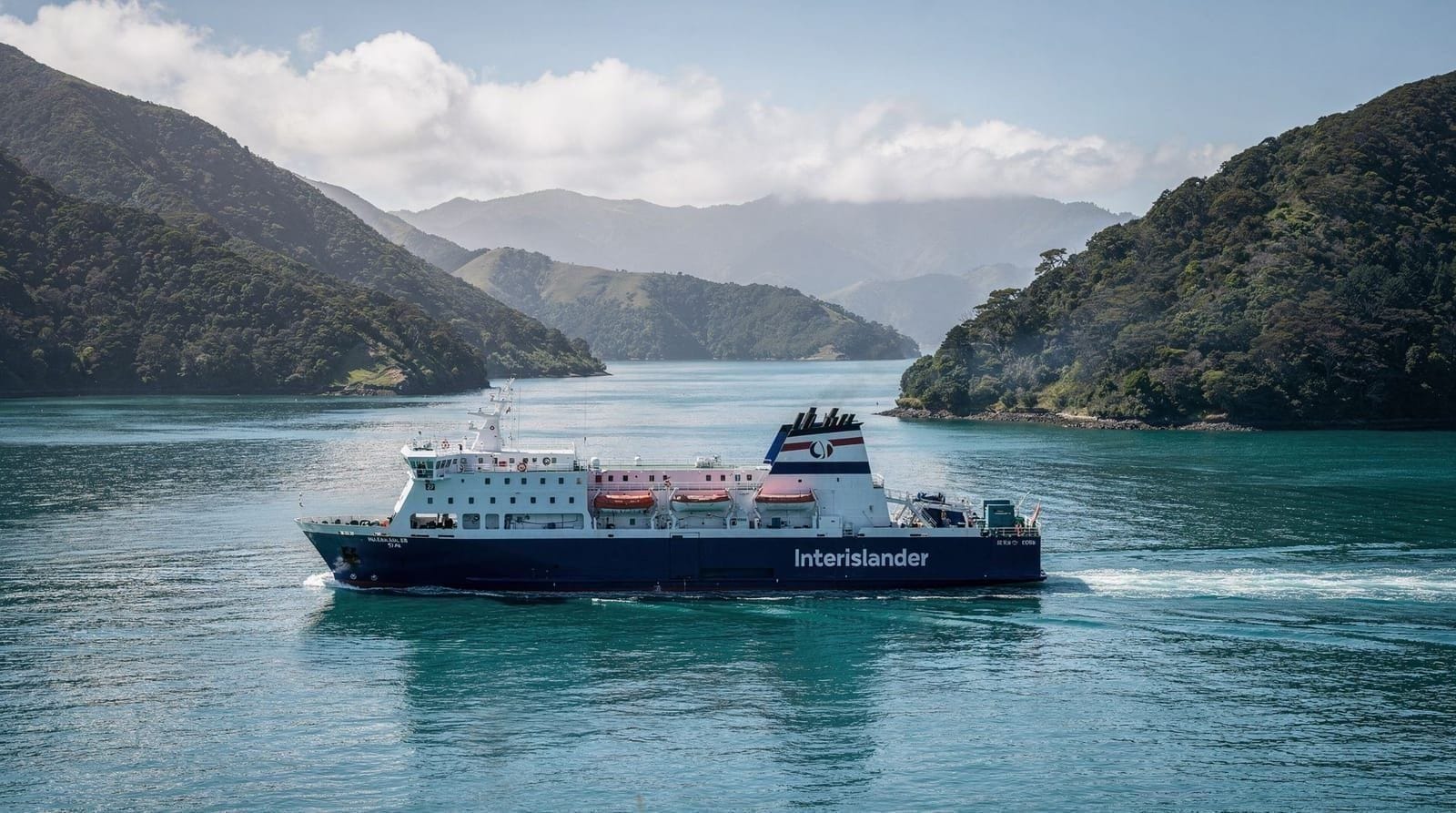
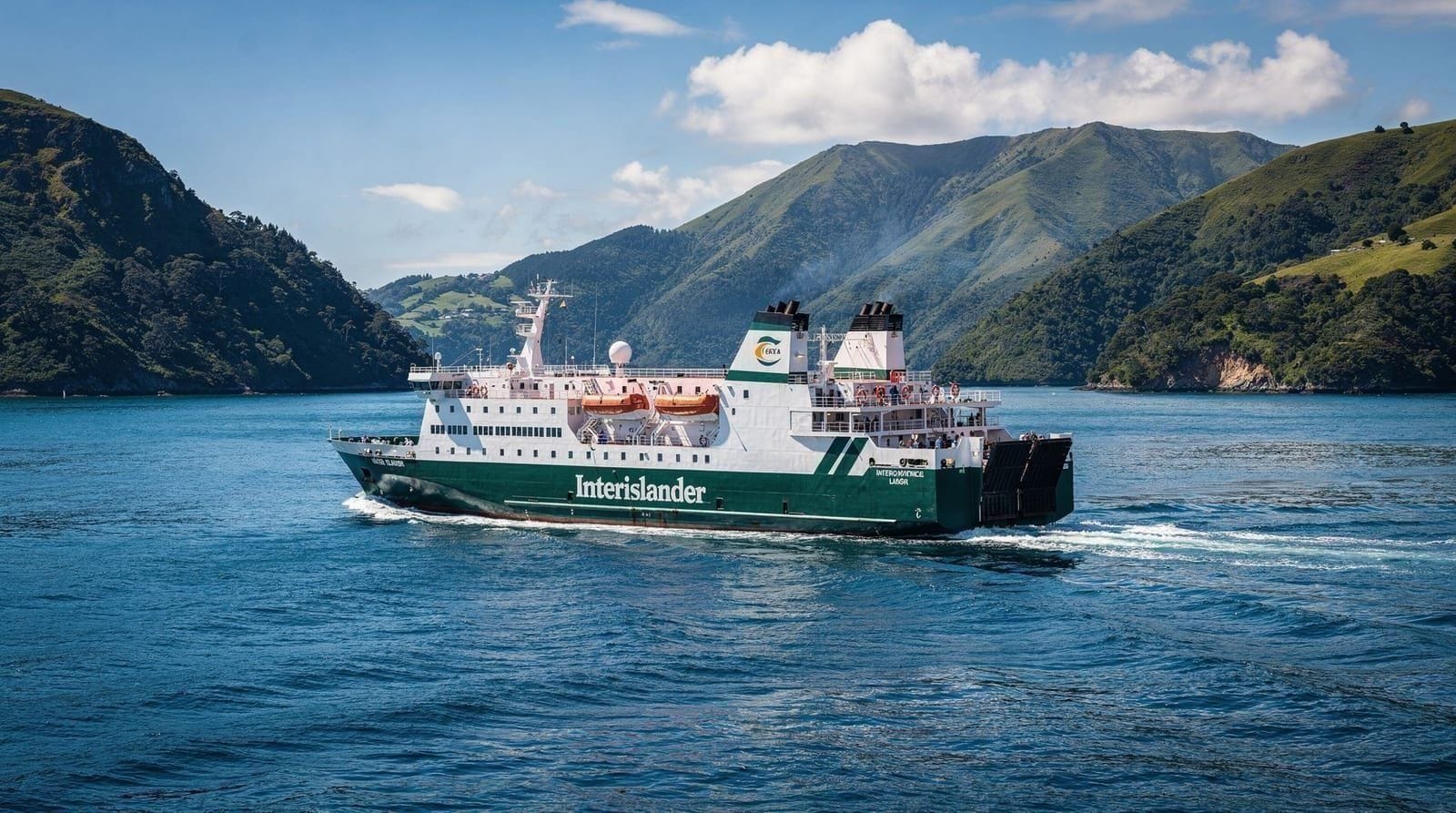
The final hour through the Marlborough Sounds — narrow, forested waterways dotted with small settlements — is the highlight of the trip, and it’s worth being on an outer deck or by a window for it rather than staying in the lounge the whole way. Both operators’ vessels have cafés and a bar, and Interislander’s larger ships include a proper restaurant if you’d rather sit down for a meal during the crossing than grab something quick.
Foot passenger or bringing a car?
If your trip only covers Picton, Marlborough and Nelson, a car genuinely opens up far more of the region than relying on local transport, and most travellers continuing into the South Island bring one across. If you’re only doing a short Picton or Marlborough Sounds stopover before flying home from Wellington, travelling as a foot passenger and picking up transport on arrival (or joining a guided tour) is cheaper and avoids the vehicle booking pressure entirely.
A guided alternative to the DIY crossing
If you’d rather not manage vehicle bookings, sailing times and Picton transport separately, this Wellington to Picton Interislander ferry package bundles the crossing itself, useful if you want the logistics simplified without giving up the flexibility of arranging your own onward South Island travel from Picton.
What’s on the other side
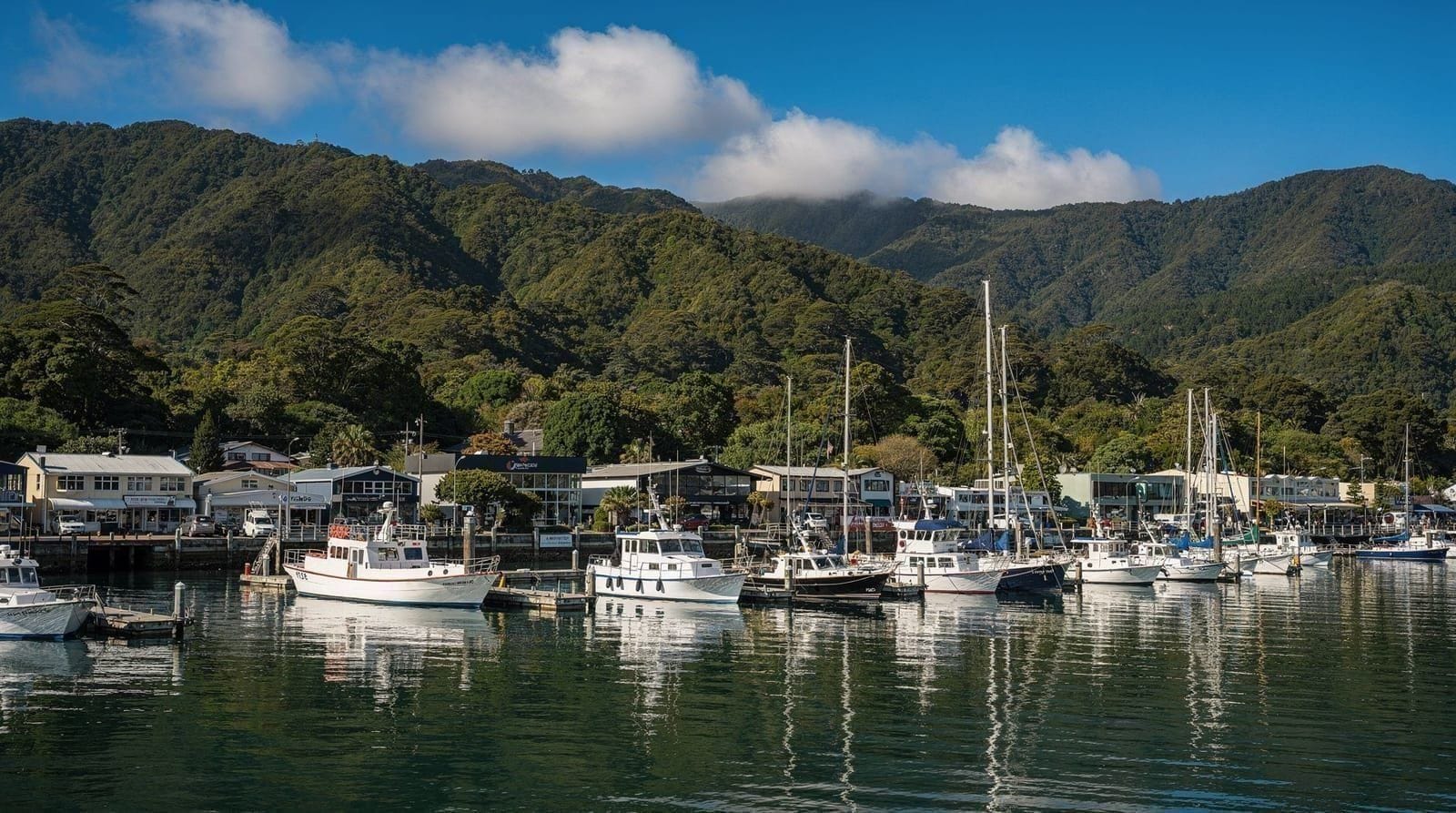
Picton itself is small but a genuinely pleasant base for a night before continuing further into the South Island, and our Picton destination guide covers the town’s own attractions if you’re not rushing straight through. From there, Marlborough Sounds cruises and wine-region day trips are both easy additions if your schedule allows a stopover rather than continuing straight on toward Nelson or Kaikōura. Our Picton and Marlborough day trip via ferry guide covers exactly this same-day structure if you want the crossing built into a single, tightly-timed outing rather than an overnight stay.
The crossing as part of the adventure, not just transport
It’s worth reframing the ferry itself as one of the trip’s highlights rather than a logistics step to get through — our Cook Strait ferry as an adventure piece makes that case in more depth, and it’s a useful mindset shift if you’ve been dreading the crossing as dead time rather than looking forward to the Marlborough Sounds approach.
Day trip or overnight — the honest answer
A same-day return crossing to Picton is technically possible but leaves very little useful time on the ground once you account for the 3.5-hour crossing each way, and most travellers get considerably more value from at least one night in Picton or Blenheim before returning rather than treating the ferry as a rushed there-and-back day trip.
Combining the ferry with a longer South Island loop
If Cook Strait is one leg of a longer trip rather than a there-and-back stopover, our Wellington to South Island via ferry, 5 days itinerary and the broader Wellington 1-week North Island and ferry plan both work the crossing into a fuller multi-day structure, including realistic timing for Picton, Marlborough wine country and beyond.
Checking in and boarding
Both operators recommend arriving at the terminal well ahead of departure — generally at least 60 minutes for foot passengers and longer if you’re bringing a vehicle, since check-in and loading take noticeably longer than a typical short domestic flight. Vehicles are loaded by lane order rather than a free-for-all, so following terminal staff instructions rather than trying to find your own shortcut avoids delaying the whole loading process.
What to pack for the crossing itself
A layer for the open-deck sections is worth having even on a mild day, since wind on the water is consistently stronger than the equivalent temperature on land — the same wind-resistant-over-warm principle that applies to Wellington generally applies doubly out on Cook Strait. If you get seasick easily, avoid a heavy meal immediately before boarding, and consider staying on a middle deck with a forward view rather than the stern, where motion is often more pronounced.
Bikes, bags and luggage handling
Both operators handle checked luggage and bikes with minimal fuss, generally for a small additional fee on bikes — confirm the current policy and cost directly with your chosen operator when booking rather than assuming it’s included, since fee structures do shift between seasons. Foot passengers with heavy luggage should also confirm terminal-to-departure-gate walking distances, since some terminals require more walking than a typical ferry terminal.
Peak season versus off-peak crossings
Summer sailings run considerably fuller than the shoulder seasons, and popular departure times — particularly the first morning sailing and the last evening one — book out well ahead during December through February. If your dates are flexible, a mid-morning or early-afternoon crossing during the shoulder seasons (autumn or spring) is both cheaper and less crowded than a peak-season, peak-time sailing.
Food and drink on board
Both operators’ vessels sell food ranging from casual snacks and pastries to, on Interislander’s larger ships, a full sit-down restaurant service — worth checking menus and pricing ahead if a proper meal during the crossing is part of your plan, since options and quality vary noticeably between the smaller and larger vessels each operator runs. Bringing your own snacks is also entirely acceptable if you’d rather not rely on onboard pricing for a 3.5-hour trip.
Travelling with children on the crossing
Both operators generally cater reasonably well to families, with lounges and open deck space giving children room to move during the longer crossing — the Marlborough Sounds section in particular tends to hold younger travellers’ attention better than the open-strait stretch. Bring activities for the earlier, less scenic part of the journey, and save the window seats for the Sounds approach when the view genuinely improves.
Frequently asked questions about the Cook Strait ferry
How rough does the Cook Strait crossing actually get?
Most crossings are calm to moderately choppy; genuinely rough conditions strong enough to cause widespread seasickness or delays happen periodically rather than routinely, most often during significant winter or spring weather systems.
Is Interislander or Bluebridge better for a first-time crossing?
Neither is objectively better — Interislander offers a more polished onboard experience at a generally higher price, while Bluebridge is typically the more budget-friendly option, particularly on off-peak or night sailings.
Can I bring a rental car across on the ferry?
Yes, though confirm with your rental company first, since some agreements restrict inter-island travel or require notifying them in advance of a Cook Strait crossing.
Is it worth booking a bundled ferry package instead of doing it myself?
Only if you’d rather not manage sailing times, vehicle bookings and Picton onward transport separately — a bundled option simplifies the logistics but doesn’t change the crossing itself.
The bottom line
The Cook Strait crossing itself is straightforward and, on a good day, genuinely one of the better scenic ferry rides available anywhere — the real planning work is in booking vehicle space early, allowing weather buffer around tight connections, and deciding honestly whether a day trip or an overnight stay makes better use of the crossing. Get those three things right and the ferry becomes one of the more memorable parts of a Wellington-based South Island trip rather than just a logistics hurdle to get through.