Interislander ferry review: real price, crossing time, and honest advice
Wellington and Picton: Interislander Ferry
Duration: 3.5h
What the Interislander ferry actually is
The Interislander is one of two operators running the Cook Strait crossing between Wellington on the North Island and Picton on the South Island, and for most visitors planning a New Zealand trip that spans both islands without flying, it’s arguably the single most important piece of transport logistics in the whole itinerary. This isn’t a scenic cruise booked purely for the experience — it’s genuine, practical inter-island transport that happens to pass through some genuinely spectacular scenery along the way, almost as a bonus rather than the point of the trip.
| Where | Wellington (Waterloo Quay) to Picton, South Island |
| Cost | NZD 52–60 one-way, foot passenger; vehicles from around NZD 150 |
| Time needed | Around 3hrs sailing, 3.5–4hrs door-to-door |
| Getting there | Terminal is a short walk or taxi from central Wellington |
| Best time | Book weeks ahead for summer and school holidays |
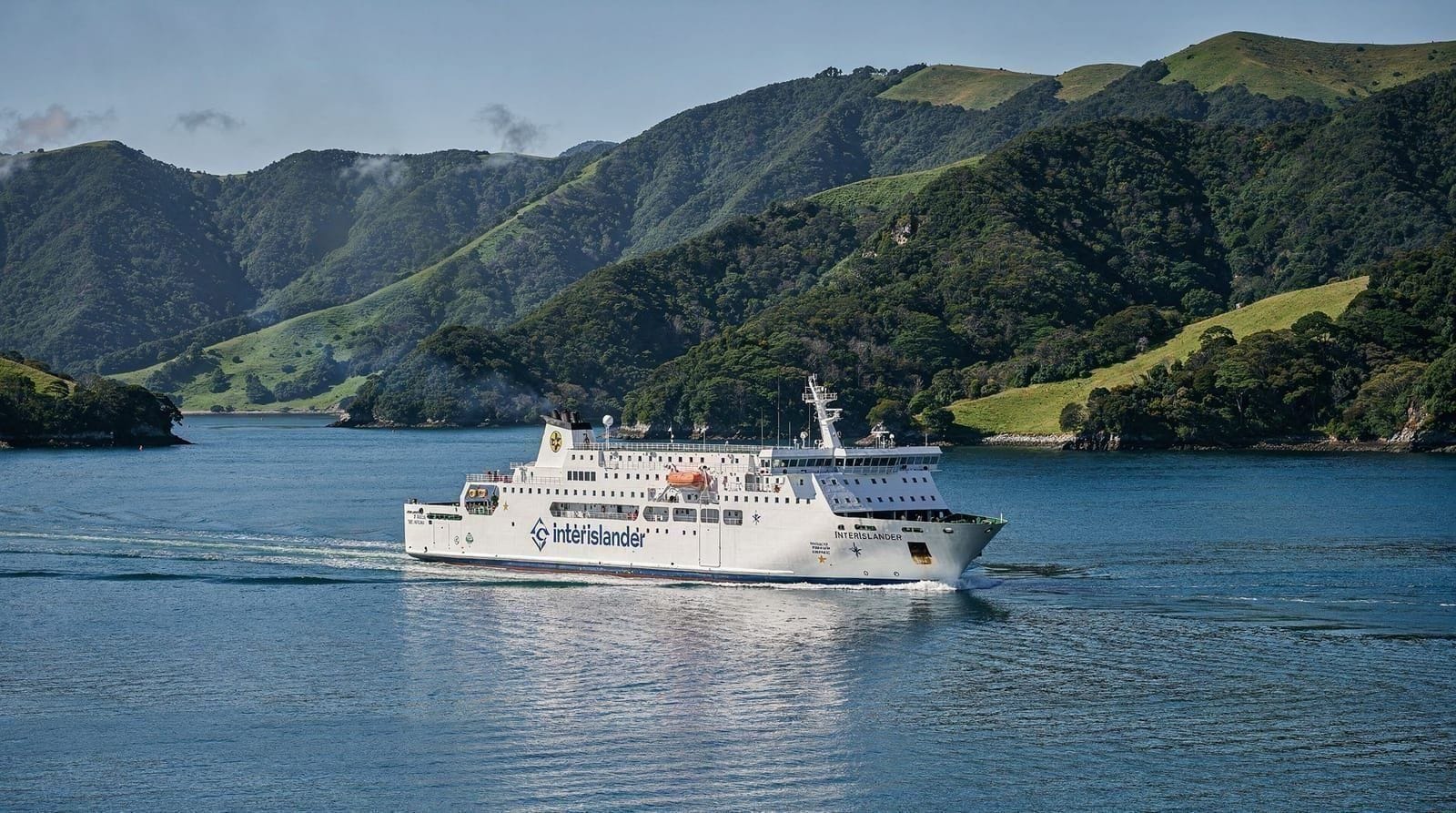
The Interislander ferry between Wellington and Picton is scheduled at around 3 hours for the crossing itself, though the honest total time commitment — including check-in, boarding procedures, and disembarkation at either end — runs closer to 3.5 to 4 hours door to door. It carries both foot passengers and vehicles, from standard cars to campervans and larger vehicles, making it the practical backbone of most self-drive South Island itineraries departing from Wellington.
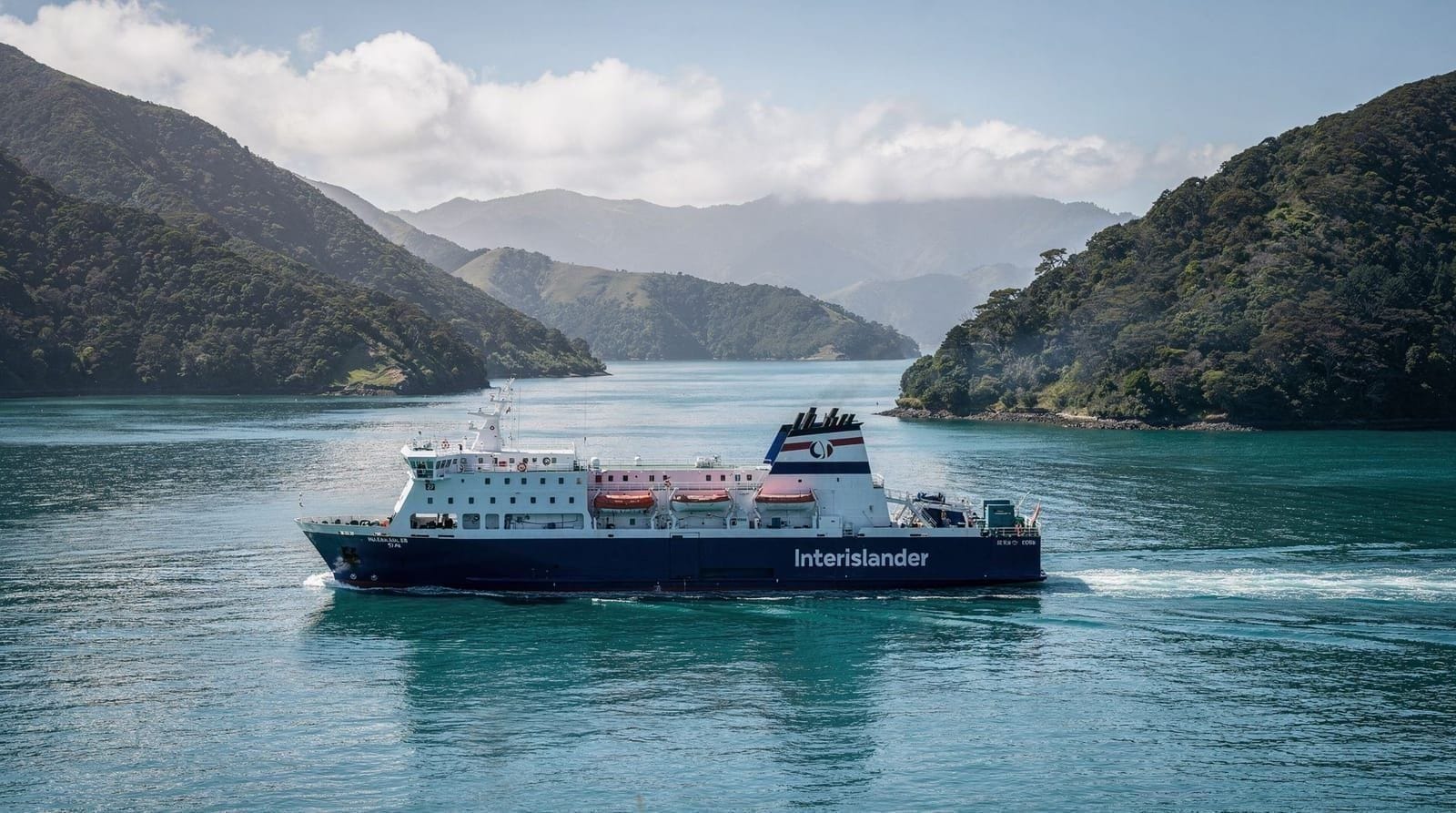
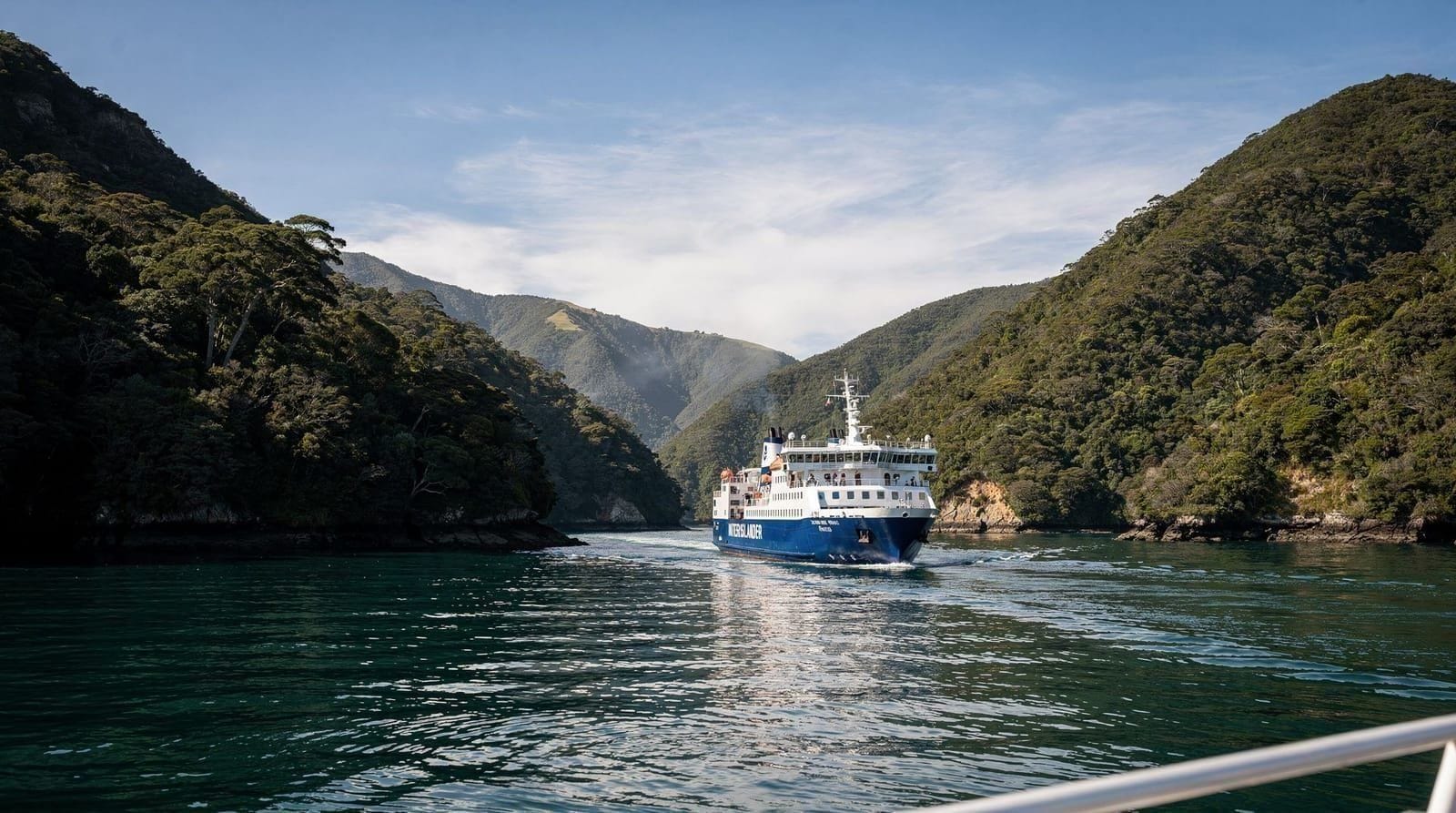
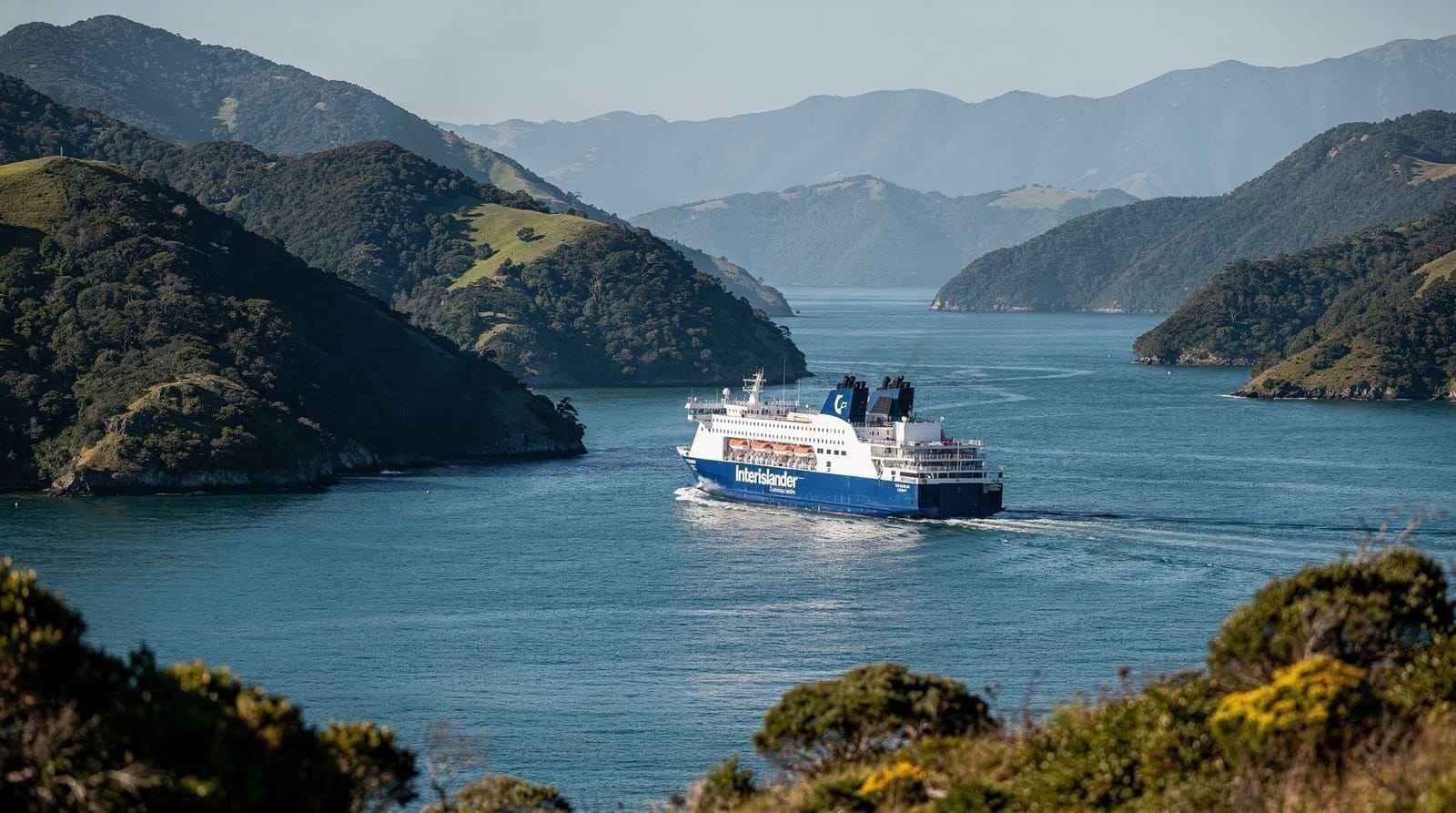
The route itself splits into two very different characters: sheltered harbour approaches at both ends, including a genuinely scenic threading through the Marlborough Sounds into Picton, bookending an open Cook Strait middle section that can range from smooth to properly choppy depending on wind and swell on the day.
The Interislander service has operated in some form since the mid-1960s, when rail-and-passenger ferries first replaced the slower coastal shipping routes that previously connected the two islands. That long operating history is part of why the crossing feels like genuine infrastructure rather than a tourist novelty — locals use it for freight, commuting between islands for work, and moving vehicles as much as visitors use it for sightseeing, which shapes the practical, no-frills character of the whole experience.
A typical crossing, step by step
Foot passengers and vehicles check in separately at the ferry terminal, with vehicle check-in typically required earlier than foot-passenger check-in due to the loading logistics involved in getting a full vehicle deck organised before departure. Boarding for vehicles happens via a ramp onto the vehicle deck, while foot passengers board through a separate walkway directly to the passenger areas. Once underway, the ship moves out through Wellington Harbour — itself scenic, passing close to the harbour heads — before entering the open Cook Strait crossing proper, typically the roughest section of the whole journey if conditions are anything less than calm.
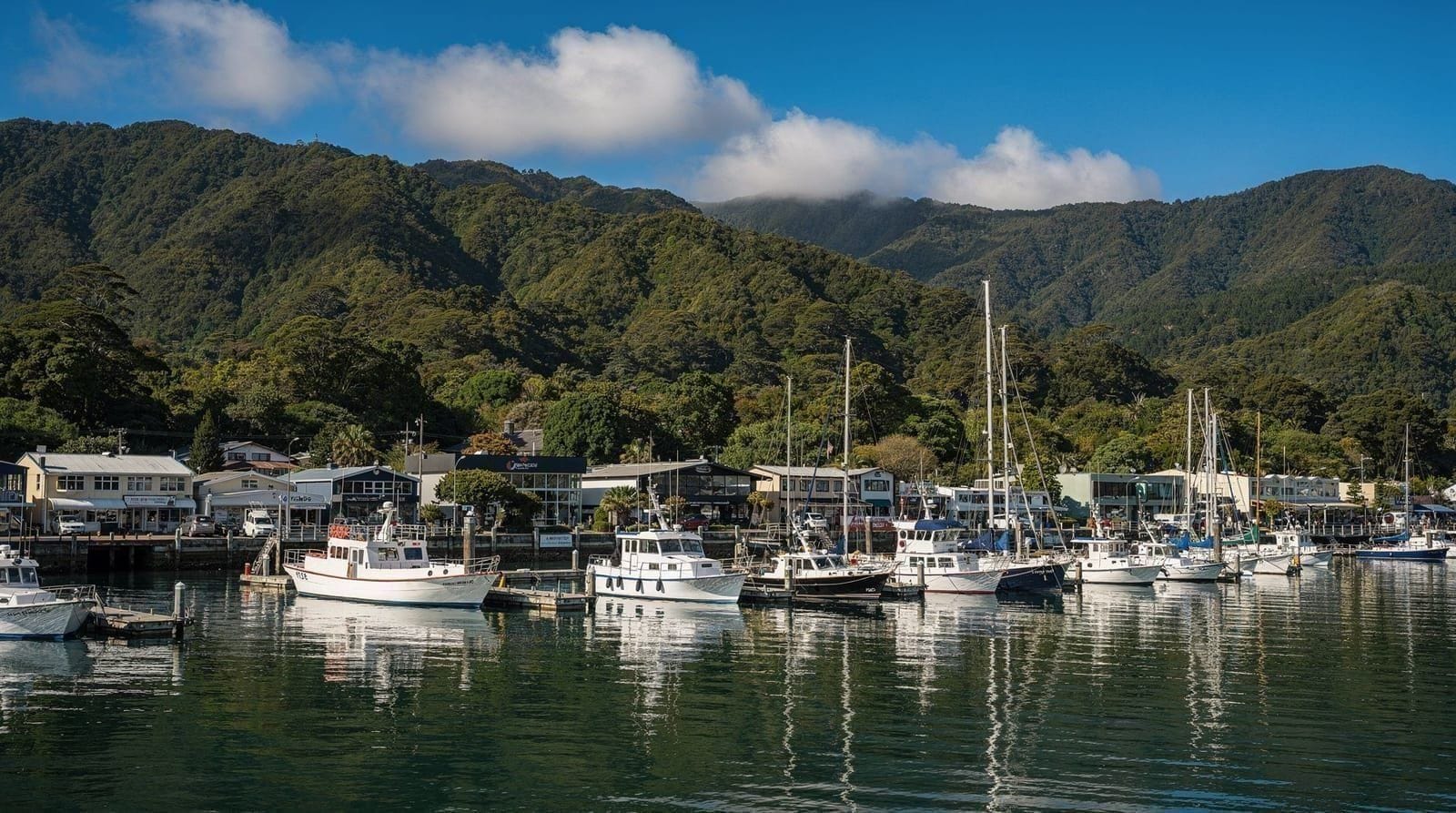
As the ferry approaches the South Island, it enters the sheltered waters of the Marlborough Sounds, and this final stretch into Picton is consistently rated the most scenic part of the crossing — calm water, close forested hillsides, and a real sense of arrival after the open-water section. Disembarkation follows a similar reverse process, with vehicles typically unloading before foot passengers make their way off the ship.
What’s included and what it costs
Foot-passenger fares typically start around NZD 52 to 60 one-way, with vehicle fares priced considerably higher and scaled to vehicle length — a standard car costs meaningfully more than a foot-passenger fare, and campervans or larger vehicles more again. Fares vary by season and how far ahead you book, with earlier bookings and shoulder-season travel generally offering better rates than last-minute peak-summer sailings.
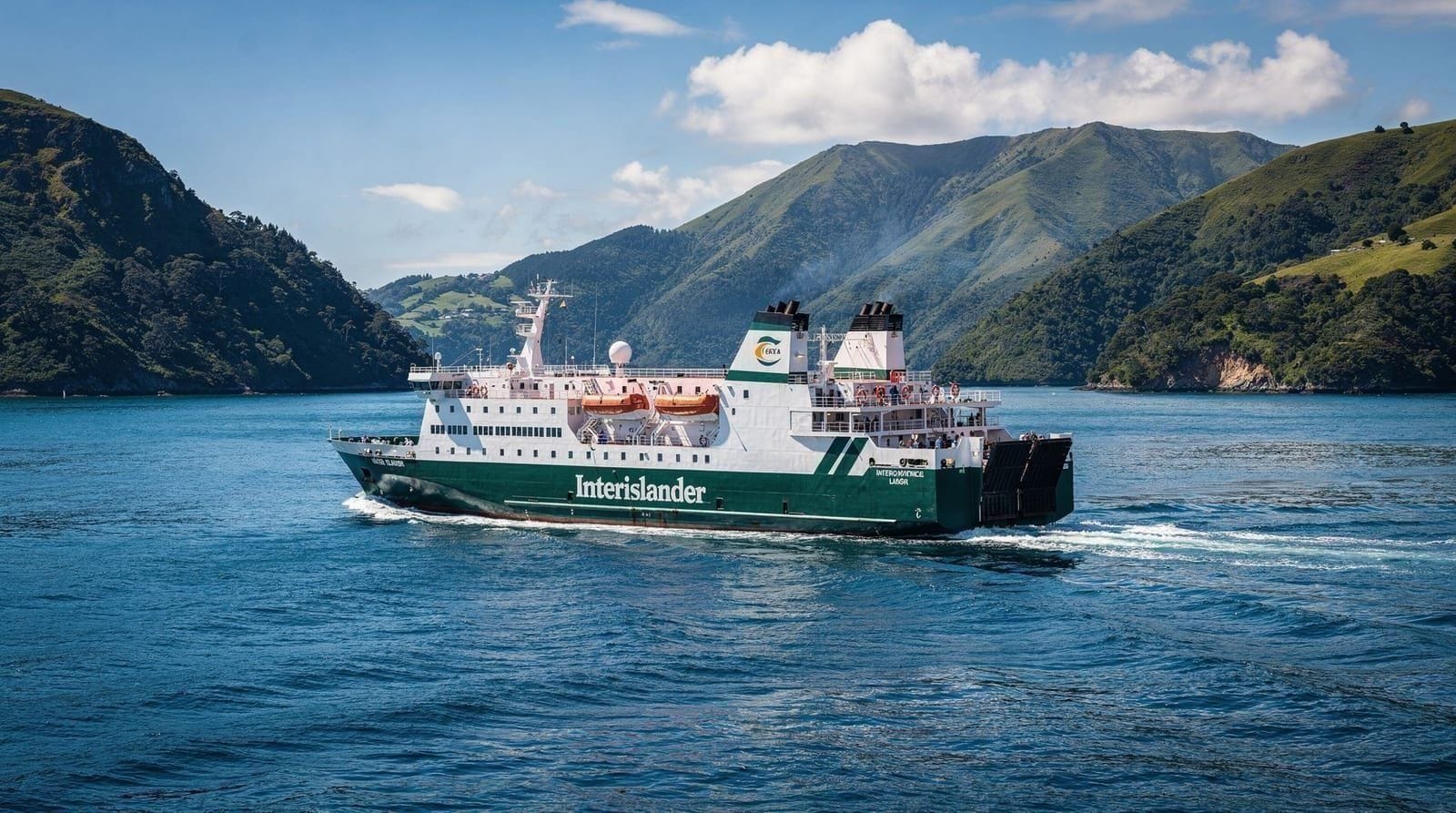
The ticket covers the crossing itself; onboard, most sailings offer food and drink options, seating areas, and outdoor deck access for taking in the Marlborough Sounds approach, though specific onboard amenities can vary by vessel. If you’re bringing a rental car, it’s worth confirming with your rental company in advance that inter-island ferry travel is permitted under your agreement — some rental companies restrict this or apply an additional fee, and it’s a detail worth sorting out before you arrive at the terminal rather than discovering it there.
For a family of four travelling as foot passengers, expect roughly NZD 200 to 250 total one-way at typical adult and child rates. Add a standard car to that same booking and total cost rises considerably, generally into the NZD 300 to 450 range one-way depending on vehicle length and how far ahead you book — vehicle transport is genuinely the larger cost driver in most family crossings rather than the individual passenger fares themselves.
| Traveller type | Typical one-way fare (NZD) | What drives the price |
|---|---|---|
| Foot passenger, adult | ~52–60 | Fixed regardless of season, small early-booking discount |
| Foot passenger, child | Roughly half adult fare | Same as above |
| Standard car + driver | ~150–250 | Vehicle length, season, and how far ahead you book |
| Campervan / larger vehicle | ~250–400+ | Length and height categories priced progressively higher |
Onboard, most sailings run a café or food counter, a lounge with seating, and outdoor deck access, though exact facilities can vary slightly between vessels on the Interislander fleet — none of this is included in the base fare, so budget a little extra if you plan to eat on board rather than before boarding or after arrival.
Getting to the Wellington terminal
The Wellington terminal is at Waterloo Quay, close enough to the railway station and central city that foot passengers can walk from most CBD accommodation in 10 to 15 minutes, and it’s a straightforward taxi or rideshare hop from anywhere further out. Drivers heading over on a vehicle booking should allow more buffer than foot passengers, since check-in lanes and loading can take longer than expected during peak summer sailings or busy holiday weekends — arriving right at the cutoff rather than well ahead of it is a common way to add unnecessary stress to the start of a South Island trip. If you’re staying in central Wellington the night before an early sailing, the terminal’s proximity to town makes an early departure genuinely manageable without needing to relocate accommodation the night before.
Accessibility and practical logistics
The Interislander’s vessels are generally well equipped for accessibility, with lifts connecting decks, accessible seating areas, and accessible restrooms, making foot-passenger travel manageable for most mobility levels. Vehicle passengers with accessibility needs should check in with staff at the terminal for any assistance required with boarding or disembarkation, particularly if a wheelchair or mobility aid is involved, since vehicle deck logistics differ meaningfully from the separate passenger walkway route used for foot passengers.
Is it worth it — the honest verdict
For anyone planning to see both the North and South Islands without flying between them, the Interislander isn’t really an optional add-on — it’s the practical way to move a vehicle and yourself between islands, and comparing it against flying misses the point entirely if you want your own car waiting on the other side of the crossing. Taken on its own terms, it’s a genuinely well-run, scenic crossing, and the Marlborough Sounds approach into Picton in particular is worth staying on deck for rather than retreating inside for the whole journey.
The honest thing to plan around is Cook Strait’s variable conditions. This is open ocean where two seas meet, and while the sheltered sections at either end are calm, the middle stretch can be genuinely rough on a bad-weather day — not something to be alarmed about, since the vessels and crew are well equipped for it, but worth taking seasickness precautions for if you’re at all prone to it, and worth checking the forecast for if you have any flexibility in your sailing date.
Who this suits
This suits anyone driving between the North and South Islands as part of a wider New Zealand trip, travellers who want their own vehicle on both islands rather than renting separately at each end, and anyone who appreciates genuinely scenic transport over a purely functional flight. It also suits budget-conscious travellers, since a foot-passenger ferry fare compares favourably against short-haul domestic flight prices once you factor in getting to and from airports on both ends, which are typically further from each city centre than the ferry terminals are. It’s a core piece of itineraries like Wellington and the South Island in a week via ferry and Wellington to the South Island in 5 days.
It suits less well travellers with severe, hard-to-manage seasickness who have a flying alternative available and no strong need for a vehicle on both islands, and anyone on an extremely tight schedule for whom a flight’s shorter total transfer time (roughly an hour versus a 3.5- to 4-hour ferry commitment) matters more than the ferry’s scenery or vehicle convenience. Business travellers or anyone with a single fixed appointment on the other island with no schedule slack should also weigh the ferry’s exposure to weather-related delays against a flight’s generally more predictable timing.
Tips for visiting
Book well ahead, especially for a vehicle booking or any sailing during Christmas, New Year, or school holiday periods, when capacity — particularly for vehicles — sells out fastest. Arrive at the terminal with a comfortable buffer before your scheduled check-in cutoff; missing it can mean rebooking onto a later sailing, which is an avoidable stress with a bit of planning, especially if your onward accommodation or connections are time-sensitive.
Check the marine forecast in the days leading up to your crossing if you have any flexibility, and take seasickness medication proactively rather than waiting to see how you feel once underway, particularly if conditions look likely to be rough. Spend time on deck through the Marlborough Sounds approach into Picton specifically — it’s consistently rated as the most scenic part of the whole crossing, and easy to miss if you stay seated inside for the entire journey.
Pack a light jacket even on a warm day, since wind on deck can be considerably stronger than at ground level in either port town, and bring snacks or entertainment for younger travellers if the crossing coincides with nap time or a restless afternoon — the roughly 3.5 to 4 hour total commitment is a meaningful stretch for children used to shorter car or plane trips.
Best season for a calmer crossing
Sea conditions on Cook Strait can be rough at any time of year, but late spring through autumn (roughly October to April) generally offers a somewhat better statistical chance of calmer water than the depths of winter, when southerly systems more frequently push through the strait. That said, this is a genuine weather-dependent variable rather than a guarantee either way — some winter crossings are perfectly smooth, and some summer crossings turn choppy with little warning, so checking the specific forecast for your actual sailing date matters more than the season alone.
| Season | Typical conditions | Booking pressure |
|---|---|---|
| Oct–Apr (late spring–autumn) | Statistically calmer, more settled | High — book weeks ahead, especially vehicles |
| Dec–Jan (peak summer) | Generally calm but terminal is busiest | Very high — school holidays sell out fastest |
| May–Sep (winter) | More variable, occasional rough or delayed sailings | Lower — easier to book close to travel |
Interislander vs Bluebridge
Both Interislander and its competitor Bluebridge run essentially the same Cook Strait route with broadly comparable pricing, timing, and conditions, so the practical choice between them usually comes down to schedule fit, current fares, and small differences in terminal location and onboard amenities — neither operator is meaningfully “better” in a way that should override whichever sailing time and fare best suits your itinerary. Our Interislander versus Bluebridge ferry guide and dedicated comparison guide go through the practical differences in more depth than makes sense to repeat here.
Alternatives to consider
If you’re weighing the ferry crossing against flying between the islands, the honest trade-off is time and vehicle logistics against cost and scenery — flying is faster but means arranging separate transport on each island, while the ferry takes longer but keeps your journey (and vehicle, if you’re driving) genuinely continuous from the moment you leave Wellington to the moment you arrive in Picton. Our Cook Strait ferry as an adventure guide covers the crossing’s appeal beyond pure logistics, useful if you’re on the fence about whether it’s worth building into your wider New Zealand route at all rather than flying between the two islands.
Before booking, it’s also worth reading our Cook Strait ferry booking pitfalls guide, which covers the common mistakes travellers make around vehicle bookings, rental car restrictions, and cutoff times — small details that are easy to get wrong on a first-time booking and can cost real money or time if missed. Once you’re across, our Picton destination guide and wider Marlborough Sounds cruise review cover what to do once you’ve made the crossing, and our Wellington to the South Island in 5 days itinerary shows how the ferry crossing fits into a wider week-long route through Picton, Marlborough, and beyond.
Frequently asked questions about Interislander ferry review: real price, crossing time, and honest advice
How much does the Interislander ferry cost and how long is the crossing?
Foot-passenger fares typically start around NZD 52 to 60 one-way, with vehicle fares considerably higher and varying by vehicle size, sailing time, and season of travel. The crossing is scheduled at around 3 hours, though total door-to-door time — including check-in, boarding, and disembarkation — is closer to 3.5 to 4 hours.Is the Cook Strait crossing rough?
It can be, honestly. Cook Strait is known for variable, sometimes challenging conditions where the Tasman Sea and Pacific Ocean meet, and while the sheltered harbour approaches at both Wellington and Picton are generally calm, the open-water middle section can be genuinely choppy depending on wind and swell. Checking the forecast and taking seasickness precautions if you're prone to it is worth doing regardless of season.Should I book Interislander or Bluebridge?
Both operate the same Cook Strait route with broadly similar pricing, crossing times, and conditions, so the choice usually comes down to schedule fit with your onward travel plans, current fare promotions, and minor differences in terminal location and onboard facilities. Our dedicated comparison guide breaks down the practical differences in more depth than a single answer here can cover.Do I need to book the Interislander ferry in advance?
Yes, strongly recommended, particularly for vehicle bookings and peak summer travel dates. Foot-passenger space is generally more flexible, but vehicle capacity is limited and popular sailings — especially around Christmas, New Year, and other school holiday periods — sell out well ahead of the sailing date.What's the view like from the Interislander ferry?
Genuinely excellent on a clear day, particularly through the Marlborough Sounds approach into Picton, where the ferry threads through sheltered, forested waterways that rank among the most scenic stretches of any regular ferry route in the world. The open Cook Strait middle section is more about the sea itself than scenic land views.Can I bring a car on the Interislander ferry?
Yes, vehicles of most sizes are accommodated, from standard cars to campervans and larger vehicles, each priced according to length. If you're travelling with a rental car, confirm with your rental company beforehand that inter-island ferry travel is permitted under your rental agreement, since some companies restrict or charge extra for it.Where exactly is the Interislander terminal in Wellington?
The Wellington terminal sits at Waterloo Quay, a short walk or taxi ride from the central city and railway station, and is well served by local buses. Foot passengers arriving without a vehicle can comfortably reach it on foot from most central Wellington accommodation, while drivers should allow extra time to navigate terminal check-in lanes, especially during peak summer sailings.