NZ Parliament & the Beehive tour guide
Wellington: Historical Odyssey
Duration: 3.5h
Can you tour NZ Parliament and the Beehive for free?
Yes. Free, hour-long guided tours run daily between 10am and 4pm, departing on the hour from the Visitor Centre in the Beehive's foyer. Individual visitors don't need to book ahead, though it's recommended in busy periods since numbers are limited; groups of 10 or more must book in advance.
Why a government building belongs on a sightseeing itinerary at all
Some visitors are surprised to see a working parliament recommended alongside museums, wildlife sanctuaries and film-studio tours as a genuine sightseeing priority rather than a niche interest for civics enthusiasts only. The honest case for including it: very few free attractions anywhere in the world offer this level of direct, unmediated access to the actual machinery of a functioning national government, and the Beehive’s distinctive architecture alone makes it worth the hour even for visitors with only a passing interest in politics. Treating it as equivalent to any other headline CBD attraction, rather than a specialist add-on for a narrow audience, is the right frame for most first-time Wellington visitors deciding how to allocate a limited sightseeing day.
| Where | Pipitea, northern edge of the CBD |
| Cost | Free |
| Time needed | 1 hour, plus 15 min arrival buffer for security |
| Tours depart | On the hour, 10am-4pm daily |
| Booking | Not needed solo; required for groups of 10+ |
One of Wellington’s best free attractions is a working government building
New Zealand’s Parliament complex sits in the Pipitea area at the northern edge of the CBD, a short walk from Thorndon and the waterfront, and it offers something genuinely rare among the world’s national legislatures: a free, hour-long guided tour open to almost anyone who turns up, taking you through the debating chamber where the country’s laws are actually made and the distinctive executive wing that gives the whole complex its nickname. This is a working government building, not a museum piece, and that authenticity — you’re walking through spaces MPs and ministers use every sitting day — is part of what makes the tour worth the modest time investment, particularly for visitors with any interest in politics, architecture or New Zealand’s specific version of parliamentary democracy.
The Beehive: an unmistakable, controversial building
The building everyone actually means when they say “the Beehive” is Parliament’s executive wing, a distinctive cylindrical, tapering structure that genuinely resembles its nickname from almost any vantage point in the CBD — you’ll spot it well before you arrive at the entrance. Completed in stages through the 1970s and 1980s, the design was controversial from the start, dividing opinion between admirers of its bold, unconventional silhouette against Wellington’s more conventional government-building architecture and critics who found it an odd match for the more classically styled Parliament House it sits alongside. Whatever your own reaction, it’s become one of the most photographed buildings in the city, and tour guides typically spend a few minutes on the design’s history and reception before moving into the building’s actual working spaces — ministerial offices, the Cabinet room, and the corridors where day-to-day government business happens outside sitting hours.
Parliament House and the debating chamber
Alongside the Beehive, the tour takes in the more traditional Parliament House, an Edwardian-era building with a grander, more classically formal interior than the Beehive’s modernist executive wing, and the debating chamber itself, where the House of Representatives sits and votes on legislation. Whether you’ll see the chamber in active use during your specific tour depends entirely on the day’s sitting calendar — Parliament doesn’t sit continuously, and tours run regardless of whether the House is in session that day. If you do happen to visit during a sitting day, guides will typically point out where you can observe proceedings from the public gallery afterward, a genuinely worthwhile add-on if your schedule allows it and you have a specific interest in seeing New Zealand’s parliamentary process in real, unscripted action rather than only hearing about it.
Suffrage history on the grounds
New Zealand holds a genuinely significant place in global political history as the first self-governing country to grant women the right to vote, in 1893, and Parliament’s grounds include memorials connected to this suffrage history worth seeking out if this specific thread of the country’s political story interests you. Guides often mention this achievement as part of the tour’s broader civics content, framing it as one of several respects in which New Zealand’s small size and relative youth as a democracy produced genuinely pioneering political reform rather than simply following larger nations’ precedents.
Questions guides commonly field
Given how much of the tour covers unfamiliar territory for international visitors — MMP, the Beehive’s function, New Zealand’s specific parliamentary calendar — guides field a fairly consistent set of visitor questions worth knowing in advance if you want to arrive with useful context already in hand. Common queries include how MMP actually produces coalition governments in practice, why the Beehive and Parliament House are separate buildings rather than one unified structure, and how New Zealand’s head of state (the monarch, represented locally by the Governor-General) fits into a system where the Prime Minister and Cabinet hold the practical executive power. Arriving with at least a passing familiarity with these basics, even from a few minutes’ reading beforehand, tends to make the tour’s more detailed commentary land considerably better than going in completely cold.
Booking, timing and what to expect on arrival
Tours depart on the hour between 10am and 4pm daily from the Visitor Centre in the Beehive’s foyer, and individual visitors generally don’t need to book ahead — you can simply turn up and join the next available tour, though arriving at least 15 minutes early is essential to clear security screening and bag storage before the tour starts. Booking ahead is still sensible in genuinely peak periods (summer, school holidays) since tour sizes are capped for practical and security reasons, and a fully booked slot means waiting for the next one rather than a guaranteed spot. Groups of 10 or more must book in advance regardless of season.
Security is a real part of the experience, not a formality — expect a screening process broadly similar to an airport checkpoint, with bags, coats, phones, cameras and other electronics required to go into secure storage before you’re admitted to the tour itself. This means no photography during the tour and a genuinely device-free hour, which some visitors find refreshing and others find an adjustment; either way, it’s worth knowing in advance rather than discovering it on arrival with a packed itinerary and limited time to spare.
Part of the city itself
Parliament’s Pipitea location sits within the wider Wellington destination, close enough to the CBD core that no special transport arrangement is needed to combine a tour with the rest of a day’s sightseeing.
Part of Wellington’s broader civic identity
Parliament’s presence is a large part of why Wellington, rather than the country’s larger city Auckland, became New Zealand’s capital in 1865 — a piece of civic history worth knowing before you tour the building, and one our fuller things to do in Wellington guide touches on when placing Parliament within the city’s wider visitor appeal.
Parliament House: older, grander, and shaped by fire
Parliament House itself, the more traditional building the tour covers alongside the Beehive, has a history shaped partly by disaster. An earlier Parliament Buildings complex was destroyed by fire in 1907, a loss that led to the construction of the current Edwardian-style Parliament House in the years that followed, built with a deliberate emphasis on more fire-resistant materials and construction methods than its predecessor. That history is a useful thing to know walking through the building’s grander interior spaces, since the current structure represents a specifically post-disaster rebuilding rather than an unbroken continuity from the country’s earliest parliamentary buildings. Guides typically touch on this history briefly as part of explaining why the complex today comprises two architecturally distinct buildings — the older, fire-rebuilt Parliament House and the later, purpose-built Beehive executive wing — rather than a single unified structure.
New Zealand’s specific democracy: MMP and a small-country Westminster model
Part of what makes the tour genuinely interesting beyond the buildings themselves is New Zealand’s distinctive version of parliamentary democracy. The country uses MMP (Mixed Member Proportional representation), adopted following a 1993 referendum and first used in the 1996 general election, replacing the previous first-past-the-post system inherited more directly from the British Westminster model. MMP means New Zealand’s Parliament typically comprises a mix of electorate MPs and party-list MPs, generally producing coalition or minority governments rather than the single-party majorities more common under first-past-the-post systems — a genuinely distinctive feature of New Zealand governance that guides often explain as part of the tour’s broader civics content, and one that surprises visitors from countries with more entrenched two-party systems.
Watching Parliament in session
If your tour happens to coincide with a sitting day, guides can point you toward the public gallery, where visitors can observe live debate and voting in the House of Representatives — a genuinely different experience from the guided tour itself, since you’re watching unscripted, sometimes heated political exchange rather than receiving curated historical commentary. Gallery access and specific viewing times depend on the day’s parliamentary calendar and sitting hours, which shift throughout the year, so check current sitting dates if watching a live session specifically matters to your visit. Not every visitor finds this appealing, but for anyone with a genuine interest in how New Zealand’s parliamentary process functions in practice rather than in theory, it’s a worthwhile add-on if the timing lines up.
The grounds and their own points of interest
Parliament’s grounds, open to the public without needing to join the guided tour, include several statues and memorials worth a look if you have extra time before or after — commemorating past prime ministers, suffrage pioneers and other figures significant to New Zealand’s political history. The grounds themselves offer a pleasant, unhurried walk regardless of whether you take the indoor tour, and they connect naturally to the wider Pipitea and Thorndon area’s concentration of civic and heritage buildings.
A layer of Wellington’s history you don’t get from a museum
Understanding New Zealand’s parliamentary system — a unicameral legislature, MMP proportional representation, and a Westminster-derived tradition adapted to a small Pacific democracy — gives useful context for the rest of a culture-and-history-focused Wellington visit, since the city’s whole identity as the national capital (chosen in 1865 partly for its central location between the North and South Islands) flows directly from this building’s presence. It’s a genuinely different kind of historical experience from a static museum exhibit: rather than reading about how government works, you’re standing inside the building where it happens, guided by staff who work in and around the complex daily rather than museum interpreters reciting a fixed script.
If you want the CBD’s history woven into a broader guided walk rather than the free government-run tour standing alone, the Wellington historical odyssey tour covers several of the city’s historic sites with a local guide — check the current itinerary when booking to see how it complements a self-guided Parliament visit, since a paid, broader historical tour and the free government tour serve genuinely different purposes rather than competing directly.
Why this tour genuinely differs from a typical government building visit
Many capital cities restrict public access to their working legislatures considerably more than New Zealand does, often limiting visits to distant public-gallery viewing during scheduled sessions rather than a genuine walking tour through executive and legislative spaces alike. New Zealand’s relatively open approach reflects a broader cultural emphasis on government accessibility and transparency that shows up elsewhere in the country’s civic life too, and it’s genuinely worth appreciating as a point of difference rather than assuming every national parliament offers something comparable. Visitors who’ve tried to access equivalent buildings in larger or more security-conscious countries often remark on how much more direct and unmediated New Zealand’s version feels by comparison.
What’s nearby, and building a Thorndon history morning
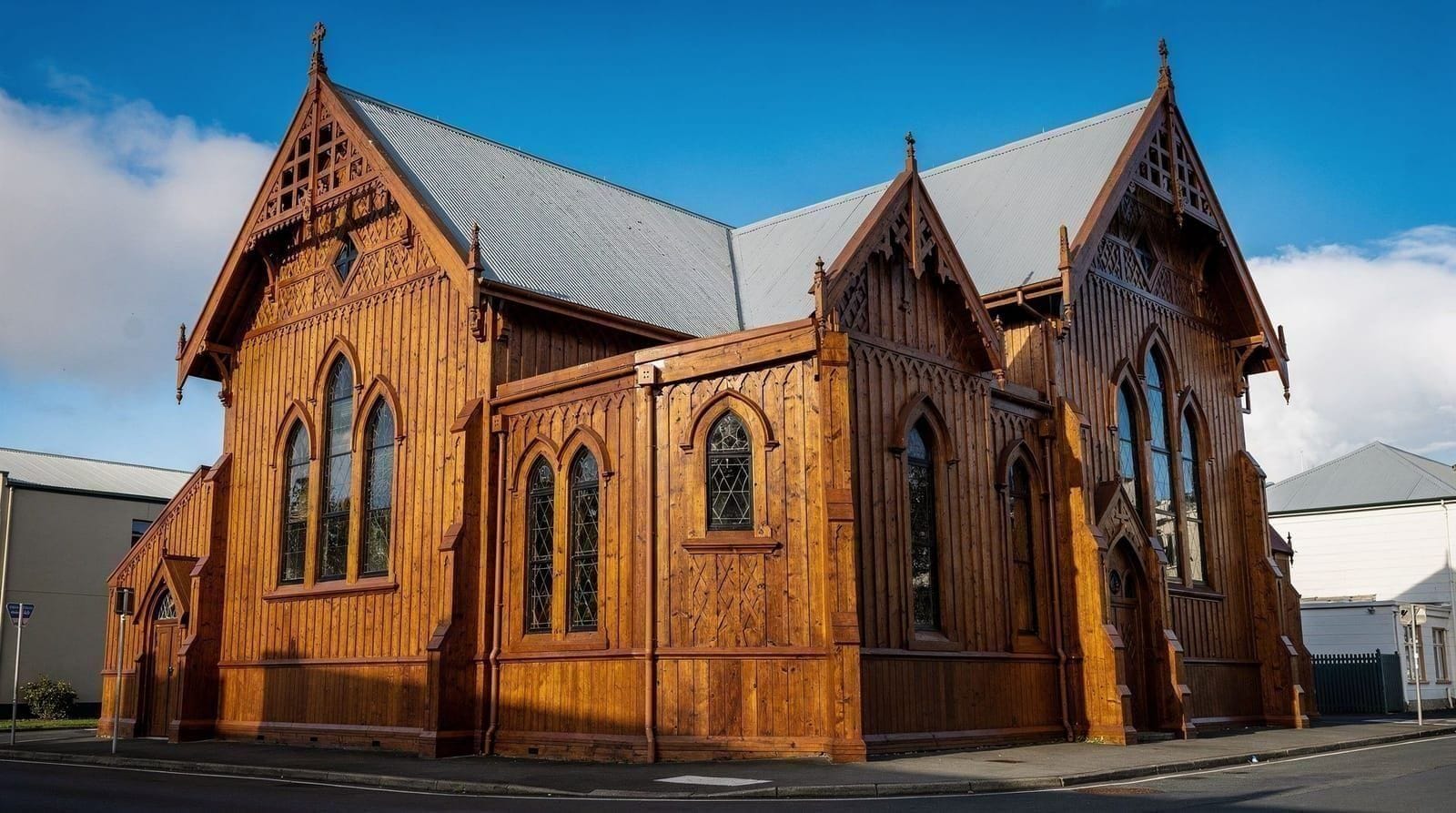
Parliament’s Pipitea location puts it within easy walking distance of several of the city’s other free heritage stops, making it a natural anchor for a half-day focused on Wellington’s colonial and civic history rather than its film heritage or wine country. Old St Paul’s, a short walk away, is a genuinely striking timber Gothic Revival church and one of the city’s most distinctive heritage buildings, free to enter and open daily. The Katherine Mansfield House in Thorndon proper preserves the childhood home of New Zealand’s best-known short-story writer, a smaller, more domestic counterpart to Parliament’s civic grandeur. Together, these three stops — free government tour, free heritage church, modestly priced writer’s house — make a genuinely full, low-cost morning without needing to book anything except, optionally, the Parliament tour itself in advance.
Practical tips for visiting
Dress is casual and there’s no formal dress code enforced for the public tour, though comfortable walking shoes are sensible given the amount of standing and walking through corridors involved. Wellington’s characteristic wind means a jacket is worth carrying regardless of season, since the walk between Parliament and nearby Thorndon attractions is exposed in places. If you’re combining the tour with other CBD sightseeing the same day, plan your route so the tour’s fixed hourly departure slots don’t clash with other timed bookings elsewhere in the city — a Parliament tour taking the full hour plus arrival buffer eats up more of a morning than its modest scale might suggest.
Fitting Parliament into your wider Wellington plans
For visitors building a first full day in the capital, the Parliament tour pairs naturally with the fuller things to do in Wellington list, and it’s worth checking our Wellington in 2 days itinerary if you’re deciding how to sequence it alongside Te Papa and the cable car. Budget-focused visitors should also note it belongs firmly on any free things to do in Wellington list — a genuinely substantial free attraction rather than a token inclusion. A waterfront walk either side of the tour rounds out a pleasant, low-cost CBD morning covering both civic history and Wellington’s harbour scenery in the same outing.
Photography and what you can bring home
Because phones and cameras are stored during the tour itself, you won’t come away with photos from inside the debating chamber or the Beehive’s interior — a genuine trade-off for the authenticity of touring a live working government building rather than a museum reconstruction built for photo opportunities. Exterior photos of the Beehive and Parliament House grounds are unrestricted before and after your tour, and the building’s distinctive silhouette photographs well from several angles around the surrounding public grounds.
A useful anchor for a Thorndon-focused day
Because the tour departs on a fixed hourly schedule rather than being available whenever you happen to arrive, it works well as a fixed anchor point around which to plan the rest of a Thorndon-focused morning or afternoon — arrive early enough to see Old St Paul’s first, join the tour at your chosen hour, then finish with the Katherine Mansfield House once the tour concludes. Treating the tour’s fixed timing as a scheduling anchor rather than an inconvenience makes the rest of a Thorndon day considerably easier to plan around than trying to fit a flexible-timing attraction into the same slot.
Is it worth the time?
Yes, and it’s one of the better free things to do in Wellington precisely because it’s genuinely substantive rather than a token civic gesture — an hour spent inside a working national legislature, with knowledgeable guides and a level of access most countries don’t extend to casual visitors. It suits visitors with any interest in politics, architecture, or New Zealand’s specific governmental structure, and it’s a solid rainy-day option given the tour is entirely indoor. It suits less well visitors purely chasing scenic photo opportunities, since the no-photography rule during the tour itself limits what you can capture, and families with very young children who may find an hour of civics-focused commentary and a device-free environment harder to sustain than adults would.
Combining with the rest of Wellington’s culture-and-history sights
For a fuller day of Wellington’s civic and cultural history beyond Parliament itself, pair this with Te Papa for the national museum’s Māori collections and Gallipoli exhibition, or the Museum of Wellington for the city’s own maritime story. Our broader Wellington neighbourhoods guide covers Thorndon and Pipitea’s specific character if you want to understand how this civic precinct fits into the wider city beyond a single attraction, and our things to do in Wellington guide places the Parliament tour within the fuller list of the city’s headline sights.
School holiday and peak-season considerations
Tour numbers are capped for practical and security reasons, and while individual visitors don’t need to book, arriving closer to opening hours during summer school holidays or particularly busy tourist weeks gives a better chance of joining your preferred hourly slot without a wait for the next one. Off-peak visitors — weekday mornings outside school holidays, in particular — rarely encounter this issue and can generally walk straight into the next available tour without any real delay.
Combining a tour with a walk through the wider Pipitea precinct
Beyond the three core Thorndon stops already covered, the wider Pipitea area surrounding Parliament includes several government ministries and heritage buildings worth a passing glance if you’re walking between the tour and other stops — the concentration of civic architecture here gives a genuine sense of Wellington’s role as the seat of national government beyond just Parliament’s own grounds. This isn’t a dedicated attraction in its own right, but it adds context to a Pipitea walk for visitors with a genuine interest in the area’s civic character beyond the headline buildings.
How long the whole outing actually takes, door to door
Accounting for the walk to Pipitea, the 15-minute security buffer, the hour-long tour itself, and time afterward for photos on the grounds, budget roughly 90 minutes to two hours total for the Parliament visit alone, before adding any nearby stops like Old St Paul’s. This is worth knowing when building a tight morning schedule, since the tour’s modest one-hour running time understates the fuller time commitment once arrival, security and grounds time are factored in.
What happens if you’re running late for your chosen hour
If you arrive after the hour has already departed, you simply wait for the next hourly tour rather than losing your place entirely — there’s no penalty beyond the wait itself, and the Visitor Centre foyer is a reasonable place to wait given it’s already indoors and past the initial entrance. This flexibility is worth knowing if your morning schedule runs slightly behind, since it removes the anxiety of a genuinely missed, non-refundable booking that a paid, fixed-time tour elsewhere in the city might carry.
Combining the tour with lunch nearby
Pipitea and the northern CBD have a modest but real spread of cafés catering to the government workers based in the area, giving reasonable lunch options within a short walk of the Visitor Centre once your tour concludes, without needing to walk all the way back into the busier central CBD for food.
Toilets, seating and other visitor-centre basics
The Visitor Centre in the Beehive’s foyer has toilets and a small seating area available before and after your tour, useful if you’ve arrived early to clear security and want somewhere to wait rather than standing in the foyer itself. There’s no café on-site, so plan your coffee or snack stop either before arriving or after the tour concludes, particularly if you’re combining the visit with a longer Thorndon morning that already has you walking between several stops.
Language and accessibility on the tour
Standard tours are conducted in English, and guides generally speak clearly and at a measured pace suited to international visitors, though non-native English speakers with limited fluency may find some of the more detailed constitutional and MMP explanations harder to follow than the building’s more visual, architectural content. Wheelchair access is available for most of the tour route, though it’s worth checking directly with the Visitor Centre ahead of your visit if mobility is a specific concern, since a heritage building of this age carries some inherent layout constraints a purpose-built modern space wouldn’t.
A note on political neutrality during the tour
Guides are trained to present New Zealand’s parliamentary system and its history factually and without partisan commentary, regardless of which party currently holds government, a detail worth knowing if you’re wondering whether the tour’s content shifts with the political cycle. The building’s own history, MMP’s mechanics, and the Beehive’s architecture stay consistent regardless of who’s in office, which is part of why the tour remains a reliable, evergreen recommendation rather than something tied to a particular government’s tenure.
Frequently asked questions about NZ Parliament & the Beehive tour guide
Do I need to book the Parliament tour in advance?
Not as an individual visitor — tours run on the hour and you can simply turn up, though arriving 15 minutes early to clear security and bag storage is essential. Booking ahead is still worth doing in peak tourist season or if you have a fixed schedule, since tour numbers are capped and popular slots can fill. Groups of 10 or more must book in advance regardless of season.What will I actually see on the tour?
The tour covers the Beehive (the executive wing housing the Cabinet and ministerial offices), the historic Parliament House building, and the debating chamber where the House of Representatives sits, along with an overview of how New Zealand's parliamentary system and democracy actually function. Whether you see the chamber in active use depends on the day's sitting schedule.Is the Beehive actually shaped like a beehive?
Yes, genuinely — the executive wing's distinctive cylindrical, tapering shape is why it's universally known by the nickname rather than its formal title, and it's one of Wellington's most recognisable buildings from almost any angle in the CBD. The design was controversial when built and remains a talking point on tours today.What should I bring, and what's not allowed inside?
Bring photo ID and expect a security screening similar to an airport checkpoint. Bags, coats, phones, cameras and other electronic devices must go into secure storage at the Visitor Centre before the tour begins, so plan to travel light or accept a short wait handing items in and collecting them afterward.Is the tour suitable for children?
Yes, though the content — parliamentary process, legislative history, government structure — is pitched more toward adults and older children with some existing interest in civics than very young kids. Families with younger children might find the hour-long format and no-photography, no-phones restriction more challenging to manage than adults would.
Top experiences
Bookable activities with verified prices and instant confirmation on GetYourGuide.