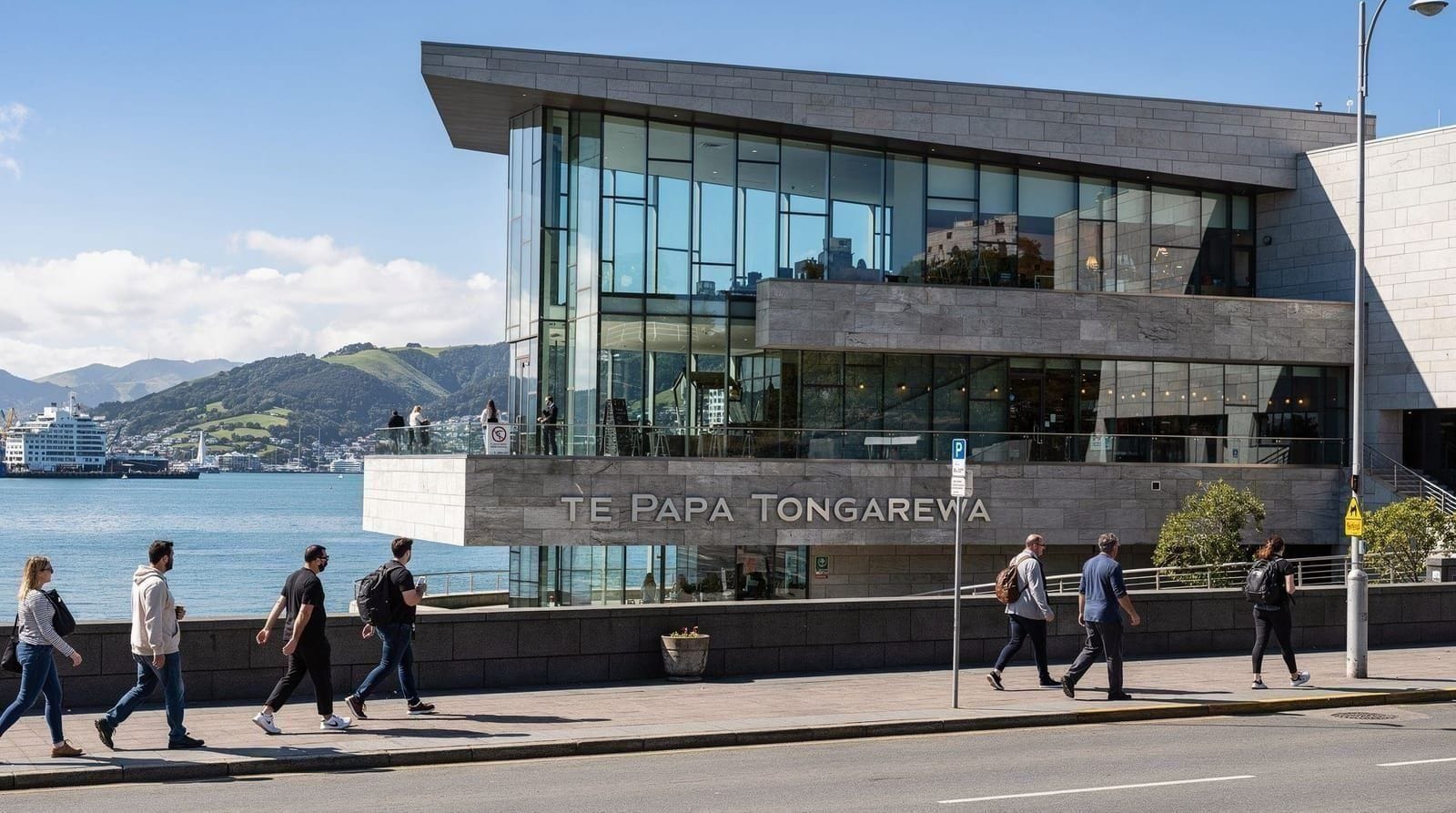
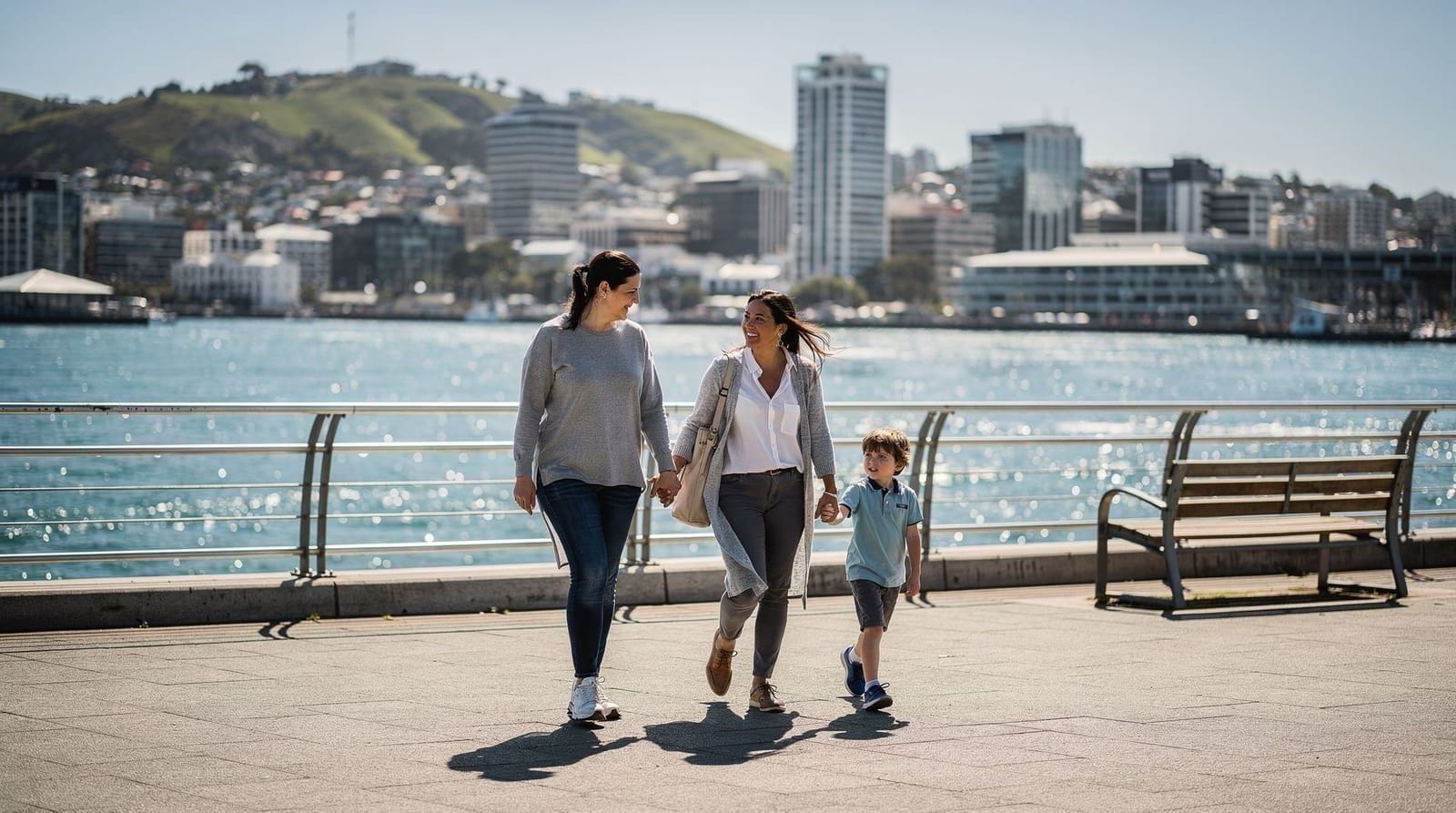
Te Papa with kids
Wellington: Museum of Te Papa Tongarewa Guided Tour
Is Te Papa good for kids and how much does it cost for a family?
Yes — Te Papa is genuinely one of the best free family attractions anywhere, built around interactive natural-history floors, an outdoor bush exhibit and a dedicated discovery centre. New Zealand residents and international visitors under 16 enter free; international visitors aged 16 and over pay NZD 35 (valid 48 hours), so a family with older teens should budget accordingly.
| Cost | Free for NZ residents/under-16s; NZD 35 for international 16+ (48hrs) |
| Time needed | 2-3hrs for most families; half a day for older kids/teens |
| Best for young kids | Bush City, natural-history floors, discovery centre |
| Best time | Weekday mornings near opening (10am) |
| Getting there | Cable Street, Wellington waterfront; fully stroller-accessible |
Setting expectations before you arrive
Parents who’ve visited large national museums with kids elsewhere in the world often arrive at Te Papa braced for the usual trade-offs — long queues, exhibits pitched purely at adults, galleries where “look, don’t touch” is the only real option for younger visitors. Te Papa is a genuine, pleasant surprise on most of these counts: queuing is rarely a major issue outside genuine peak periods, and the museum’s whole design philosophy assumes families and hands-on engagement as a core audience rather than an afterthought accommodated around a more academic core visitor. Arriving with that expectation reset tends to make the whole visit land better than bracing for a more conventional, harder-going museum experience.
Wellington’s single best family attraction, done right
Te Papa is genuinely one of the best family museum experiences anywhere, and it isn’t close — the combination of hands-on natural-history exhibits, an outdoor bush walk built for kids to move through rather than just look at, and enough scale that toddlers, primary-schoolers and teenagers can all find something engaging under one roof makes it the single stop worth building a Wellington family day around. This guide covers the practical side specifically: which galleries work at which ages, what the current entry-fee policy actually means for a family with teens, and how to pace a visit so nobody melts down by the second floor.
The entry fee, and what it means for families specifically
Since September 2025, Te Papa charges international visitors aged 16 and over NZD 35 for entry, valid across 48 hours. Every child under 16 enters free regardless of nationality, and New Zealand residents of any age continue to enter free as well. In practical terms, a family of two international parents and two kids under 16 pays NZD 70 total — not nothing, but genuinely reasonable for a museum of this scale, and the 48-hour window means you can split a visit across two shorter sessions rather than forcing one long, overwhelming day, which is worth planning around deliberately if you’re travelling with younger children who tire of museums faster than adults do. Families with teenagers aged 16 or 17 should factor them into the paying-adult calculation rather than assuming the whole family enters free.
Bush City: the standout for younger kids
Bush City, Te Papa’s outdoor exhibit built into the museum’s waterfront grounds, is consistently the highlight for younger children specifically — a recreated slice of native New Zealand bush complete with a pounamu boulder, a small cave to explore, and a treetop walkway that lets kids move around and climb rather than stand quietly in front of glass cases. It’s one of the few parts of the museum where genuinely young children (toddlers and preschoolers) get as much out of the visit as older siblings, and it’s a natural place to let pent-up energy out partway through a longer indoor visit.
The discovery centre and interactive natural-history floors
Te Papa’s dedicated kids’ discovery centre and the interactive natural-history floors are built specifically around hands-on engagement rather than passive viewing, and they’re the strongest fit for primary-school-age children — old enough to genuinely absorb the content, young enough to still find touch-screens, physical models and interactive displays more engaging than reading dense text panels. The Awesome Forces exhibit, including an earthquake simulator recreating the shake of a real historical New Zealand quake, is a reliably popular (if slightly startling) stop at this age too, and it doubles as a genuinely useful, age-appropriate introduction to why Wellington itself sits on an active fault line.
Gallipoli and the Māori collections: better suited to older kids
Gallipoli: The Scale of Our War, Te Papa’s giant-sculpture exhibition built with Weta Workshop, is visually striking enough to hold most children’s attention regardless of age, though its First World War subject matter and the emotional weight of the accompanying historical context suit primary-school-age children and older considerably better than toddlers, who tend to respond mainly to the sculptures’ scale rather than the story behind them. Similarly, the Māori collections and Rongomaraeroa marae reward genuine reading and reflection more than a young child’s typical museum attention span allows — worth a visit with older kids specifically, or a shorter, more physically-focused pass with younger ones that skips the denser context panels.
Galleries by age, at a glance
| Age group | Best fit | Approach denser galleries with |
|---|---|---|
| Toddlers/preschoolers | Bush City, discovery centre | A quick, physical-only pass, skip text panels |
| Primary-school-age | Natural-history floors, Awesome Forces | Full engagement, moderate reading |
| Teenagers | Gallipoli, Toi Art, Māori collections | Full depth, can split from younger siblings |
Managing a first-time visit vs a return trip
First-time family visitors tend to over-plan and under-estimate how much ground they’ll actually cover, given how much there genuinely is to see across six floors — treating your first visit as an exploratory pass rather than an attempt to see everything sets more realistic expectations, and the 48-hour ticket means a return the following day is always an option if the first visit leaves things unfinished. Families on a return Wellington trip, or a longer stay allowing multiple visits, can afford to be considerably more selective and relaxed, focusing a second visit purely on whichever gallery most captured the kids’ interest the first time round rather than trying to cover new ground for its own sake.
Stroller access and practical logistics
Te Papa is fully stroller-accessible throughout, with lifts connecting all floors and wide walkways designed with exactly this kind of family use in mind — a genuinely practical choice for parents managing an infant or toddler in a pram alongside older kids exploring more independently. Baby-changing facilities are available, and the museum’s ground-floor café gives a reliable spot for a feeding or snack break without needing to leave the building and lose your place in a longer visit.
Feeding and nap logistics
Te Papa’s café, on the ground floor near the entrance, is a genuinely convenient option for a meal or snack break partway through a longer visit, and it’s well set up for families with high chairs and a reasonably relaxed atmosphere that doesn’t penalise a slightly noisy toddler. If your child still naps, timing a visit around their usual nap window — either visiting in the morning before a midday nap back at accommodation, or accepting a shorter visit that ends before overtiredness sets in — genuinely improves how the whole day goes, since an overtired toddler in a large, stimulating museum is a recipe for a difficult afternoon regardless of how good the exhibits are.
Teenagers specifically: what actually holds their interest
Older kids and teenagers tend to respond differently to Te Papa than younger children, and it’s worth tailoring expectations accordingly. Gallipoli’s giant sculptures and sobering wartime history generally land well with this age group, as does the natural-history content on New Zealand’s unusual biodiversity and geological isolation. Toi Art’s contemporary and historic New Zealand art programming can genuinely engage teenagers with any interest in visual culture, more so than younger children typically show. The main risk with this age group isn’t disengagement so much as wanting considerably longer at specific exhibits than younger siblings can tolerate — worth discussing as a family beforehand whether to split up for part of the visit, with one parent taking older kids deeper into a specific gallery while another manages younger children’s shorter attention spans elsewhere in the museum.
Common family mistakes at Te Papa
A few patterns trip up families repeatedly. Trying to “see everything” in a single visit, rather than picking two or three galleries to properly engage with, tends to produce a rushed, exhausting day that satisfies nobody — better to do less well than more badly, especially with a range of ages in one group. Underestimating the emotional weight of Gallipoli for younger children is another common misstep; while visually striking, its wartime subject matter can genuinely unsettle very young kids who don’t yet have context for what they’re looking at, so a quick preview conversation beforehand about what the exhibition covers helps manage this. Finally, forgetting that the ticket is valid for 48 hours and trying to force a single exhausting day when splitting the visit across two shorter sessions would suit younger family members considerably better is a genuinely common, easily avoided mistake given the museum’s own ticket policy.
Combining Te Papa with a rainy day
Because Te Papa is entirely indoor and substantial enough to fill most of a day, it’s the automatic first choice whenever a family trip coincides with bad weather — see our dedicated rainy-day Wellington with kids guide for how to pace a full wet day around it, including which indoor pool and museum pairings work well as a physical break for restless younger kids. Expect the museum to be considerably busier than usual on a genuinely wet day, since it’s the default fallback for most families and independent travellers alike.
Comparing a family pace to a solo or couple’s visit
A family visit inevitably moves at a different pace than a solo traveller’s or couple’s — expect roughly half the ground covered in the same amount of time once you account for snack breaks, nappy changes, occasional meltdowns and the simple reality of managing multiple people’s differing attention spans simultaneously. This isn’t a flaw in the museum or in your planning; it’s simply the honest reality of family museum visits anywhere, and building slack into your schedule rather than expecting adult-pace efficiency avoids a stressful, rushed day for everyone involved.
How long to budget, realistically
Two to three hours suits most families with a realistic sense of younger children’s attention spans, covering Bush City, one or two interactive natural-history floors, and a shorter pass through Gallipoli or the Māori collections depending on age. Families with older kids and teens who have a genuine interest in the content can comfortably fill half a day or more. Given the 48-hour ticket validity, splitting a visit across two mornings — rather than one exhausting full day — is a genuinely sensible option if you’re staying in Wellington for more than a single night and want to avoid overtiring younger visitors.
When a second adult really helps
Managing more than one young child through a large, stimulating museum is genuinely easier with two adults than one, simply because splitting supervision — one adult with a toddler at Bush City while another takes an older child through the natural-history floors — lets each child engage at a pace suited to their own age rather than forcing a single group pace that inevitably under-serves someone. If you’re travelling as a couple or with another family, coordinating this kind of split for at least part of the visit is genuinely worth the logistics of agreeing a meeting point and time, since it tends to produce a noticeably smoother visit for everyone than trying to keep a wide age range together throughout.
Birthdays and special family occasions
If a family birthday or other occasion happens to fall during your Wellington visit, Te Papa’s café makes a workable low-key spot for a small celebration meal, and the sheer novelty of Bush City or the earthquake simulator often makes for a genuinely memorable birthday activity for kids who’d rather explore than sit through a conventional restaurant meal. It’s a reasonable, easy adjustment rather than requiring a separate special-occasion outing on top of an already full itinerary.
Guided tour or self-guided for families?
A guided Te Papa tour can help focus a family group that might otherwise wander without much direction, and older kids specifically tend to engage well with a guide’s storytelling approach to the natural-history and Gallipoli galleries. Families with toddlers or preschoolers, though, often do better with a slower, self-directed pace that lets a guide’s fixed schedule take a back seat to Bush City and the interactive floors, where younger kids naturally want to linger longer than a structured tour allows. For an evening visit, the Twilight Express tour compresses the highlights into a shorter after-hours slot, useful if your family’s schedule only allows a late-day visit.
Managing sibling disagreements about what to see next
With multiple children of different ages and interests, disagreements about what to prioritise next are genuinely common, and a useful approach is agreeing on a rough shared plan before entering — perhaps letting each child choose one gallery or exhibit they specifically want to see, guaranteeing everyone gets some input rather than one child’s preferences dominating the whole visit. Building in a shared, universally appealing stop like Bush City partway through also helps reset group mood if earlier disagreements have left anyone feeling like their preferences were overlooked.
School groups and weekday crowds
Weekday visits sometimes coincide with New Zealand school groups touring the museum, particularly during term time — generally not a problem for your own family’s visit, but worth expecting extra noise and activity around the more interactive exhibits at these times. This is a different kind of crowd than a weekend or holiday-period tourist crowd, and it tends to clear by early-to-mid afternoon as school groups finish their scheduled visits and head back to their buses.
Timing your visit to avoid crowds
Weekday mornings are noticeably quieter than weekend afternoons and school-holiday periods, and arriving close to opening (10am) gives younger kids the best shot at engaging with Bush City and the interactive floors before both the museum and the queues build up through the day. If a wet-weather day coincides with your visit, expect Te Papa to be considerably busier than usual, since it’s the default fallback for most families and independent travellers alike when the forecast turns.
What to skip if time or patience runs short
If a family visit is running short on time or patience, the denser historical panels throughout the Māori collections and parts of Gallipoli’s contextual material are the first things to deprioritise with younger children — the sculptures and physical taonga themselves still land well without every accompanying text panel being read in full. Toi Art, the museum’s rotating contemporary-art gallery, generally holds less appeal for young children specifically and is a reasonable skip on a family-paced visit unless an older child has a particular interest in art.
A sample two-hour family route
For families with a genuinely tight two-hour window rather than a full morning, a sensible route prioritises Bush City first (20-30 minutes, while energy is highest), moves to the interactive natural-history floors and discovery centre (45-60 minutes), and finishes with a shorter, selective pass through Gallipoli’s most striking sculptures rather than the full exhibition (20-30 minutes) — skipping the denser Māori collections and Toi Art entirely on a time-constrained visit, and saving them for a return trip if your Wellington stay allows it. This route front-loads the most physically engaging content first, when kids have the most patience, and treats the denser historical galleries as optional rather than mandatory.
What to pack for a family visit
A change of clothes for younger kids, particularly if Bush City’s cave or treetop walkway tempts a messier play session than planned, along with snacks for between-meal moments the café doesn’t cover and a reusable water bottle to avoid repeatedly buying drinks inside. A lightweight carrier or sling is worth considering for infants who’ll tire of a stroller across a multi-hour visit, particularly on the busier upper floors where manoeuvring a full-size pram through crowds is less practical than on quieter weekday mornings.
If your child has sensory sensitivities
Awesome Forces’ earthquake simulator and some of Gallipoli’s dramatic lighting and scale can genuinely overwhelm a child sensitive to noise, sudden movement or crowded spaces. Museum staff can generally advise on quieter times to visit specific galleries, and it’s worth previewing which exhibits involve sudden noise or movement before entering with a child who might find them distressing rather than exciting — Bush City and the natural-history floors are consistently the gentler, lower-stimulation option if this is a concern for your family.
Holiday programmes and special family events
Te Papa periodically runs dedicated school-holiday programming and family-focused special events on top of its permanent galleries, often timed around New Zealand’s school holiday calendar and sometimes connected to specific exhibitions or cultural occasions like Matariki. Checking the museum’s current events calendar before your visit is worth doing if your trip happens to coincide with a school holiday period, since these programmes are often specifically designed to hold younger children’s attention in ways the permanent galleries alone might not for a very young or easily distracted visitor.
Where Te Papa sits in a wider family itinerary
For families structuring a full Wellington stay, Te Papa is the anchor around which the rest of a first day should build — see the fuller things to do in Wellington list and the family 4 days itinerary for how it sequences alongside the cable car, the zoo and a regional day trip. Our Wellington neighbourhoods guide is also worth reading if you’re choosing family-friendly accommodation within easy reach of the museum.
Planning the rest of a family day around Te Papa
A Te Papa morning pairs naturally with a Cuba Street lunch and an afternoon at the cable car or Botanic Garden, or — on a wet day — with the Museum of Wellington and City Gallery Wellington as further indoor stops nearby. See our broader Wellington with kids guide for how a Te Papa visit fits into a fuller multi-day family itinerary, and our rainy-day Wellington with kids guide specifically if bad weather is forcing an indoor-focused day around the museum.
The bottom line for families
Te Papa remains the single best family activity in Wellington despite the new international-visitor entry fee, and the honest advice for most families is simple: budget for the NZD 35 per paying adult if it applies to you, arrive with a rough plan rather than an attempt to see everything, prioritise Bush City and the interactive floors for younger kids, and use the 48-hour ticket window to split a longer visit across two calmer sessions rather than one exhausting day.
Frequently asked questions about Te Papa with kids
Do kids pay to enter Te Papa?
No child under 16 pays, regardless of nationality. Since September 2025, only international visitors aged 16 and over pay the NZD 35 entry fee; New Zealand residents of any age continue to enter free.Which Te Papa galleries work best for young children?
Bush City, the outdoor native-bush exhibit with a treetop walkway and small cave, is the standout for younger kids since it lets them move around freely rather than look quietly at displays. The interactive natural-history floors and the dedicated kids' discovery centre are similarly strong for primary-school-age children.Is Te Papa stroller-friendly?
Yes, the museum's floors and lifts are designed for easy stroller access throughout, and it's a genuinely practical choice for parents with infants or toddlers who need to manage a pram alongside older siblings exploring more independently.How long should a family plan to spend at Te Papa?
Two to three hours suits most families with a realistic attention-span budget for younger kids; older children and teens with a genuine interest in the natural-history or Gallipoli exhibits can comfortably fill half a day. The 48-hour ticket window makes splitting a visit across two shorter sessions a practical option if pacing is a concern.Are the Gallipoli and Māori collections suitable for kids?
Gallipoli: The Scale of Our War is visually striking for children of most ages, though its wartime subject matter suits primary-school-age and older kids better than toddlers. The Māori collections' denser historical panels similarly suit older children and adults better than very young visitors, who tend to respond more to the physical taonga on display than the accompanying text.Is Awesome Forces' earthquake simulator suitable for sensitive kids?
It can genuinely overwhelm a child sensitive to noise or sudden movement, so preview it before entering if that's a concern. Bush City and the natural-history floors are consistently the gentler, lower-stimulation option for these families.
Top experiences
Bookable activities with verified prices and instant confirmation on GetYourGuide.